Same-Day Electrical Service Across Staten Island
AE Electric serves Staten Island with same-day electrical service for homeowners, landlords, and businesses throughout the borough. Staten Island has a high concentration of single-family homes with older wiring, aging panels, and growing EV charging demand. Our licensed electricians understand the borough’s unique needs.
Staten Island is genuinely the outlier among the five boroughs, and not only because it is the most suburban. It is the one borough that is not fed from Con Edison’s underground secondary network, which means the electrical service at your house is different from an apartment in Manhattan or Brooklyn — and so are the failure modes, the storm exposure, and the kinds of jobs that come up. The sections below cover that difference, what work costs here, generators and flood-zone work, and the outdoor and pool wiring rules that barely apply anywhere else in the city.
Call now: (646) 846-0008 — Same-day electrician service.
Electrical Services We Offer on Staten Island
- Emergency electrical repairs — same-day response for outages, storm damage, burning smells, and sparking panels
- Electrical panel upgrades — 150-amp and 200-amp service upgrades, including Con Edison coordination
- Standby generator installation — sizing, transfer switches, and permitted installs
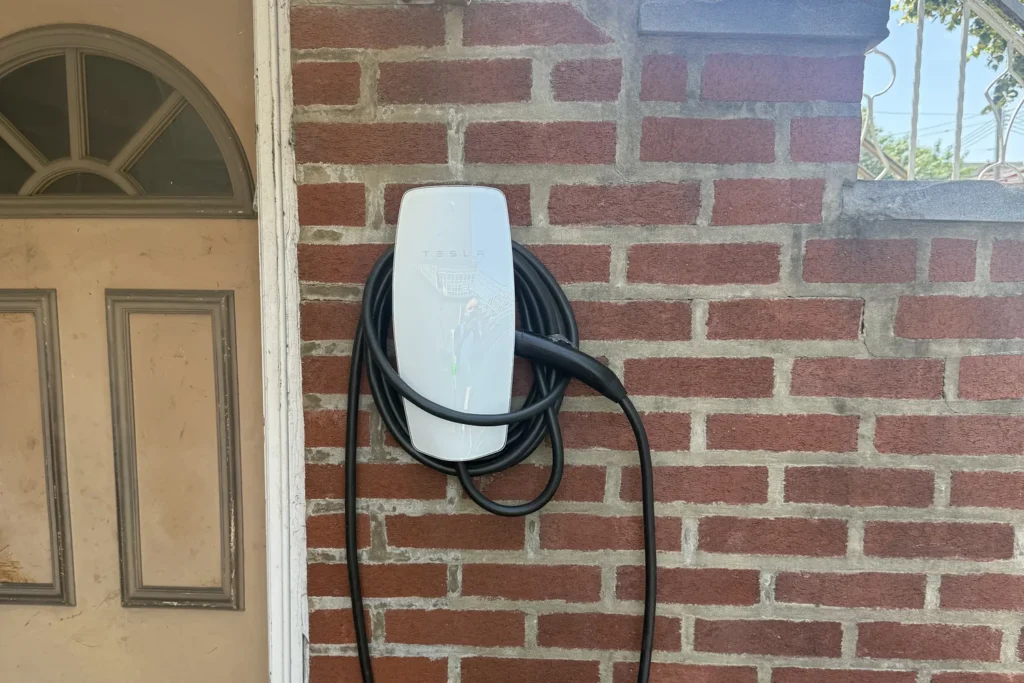
- EV charger installation — Level 2 charging in garages and driveways
- Whole-house rewiring — including knob-and-tube and aluminum wiring replacement
- Outlet, switch & GFCI installation — kitchens, bathrooms, basements, garages, and exterior receptacles
- Outdoor and landscape lighting — walkways, decks, patios, and security lighting
- Circuit additions — dedicated lines for sump pumps, hot tubs, workshops, and finished basements
- Whole-house surge protection — particularly worthwhile where service is overhead
- Commercial electrical — retail strips, restaurants, and waterfront industrial properties
What Electrical Work Costs on Staten Island
Staten Island is usually the least constrained borough to work in — driveways, garages, basements with real headroom, and no freight elevator to reserve. Larger houses mean bigger jobs on average, but the per-item rates track the citywide market. We quote a flat rate for your specific job before work starts.
| Job Type | Typical Staten Island Cost Range |
|---|---|
| Outlet replacement (single) | $85 – $175 |
| GFCI outlet installation | $100 – $200 |
| Ceiling fan installation (existing wiring) | $150 – $300 |
| Recessed lighting (per can, existing wiring) | $100 – $200 |
| Circuit breaker replacement | $150 – $350 |
| New dedicated circuit (sump pump, hot tub, workshop) | $200 – $500 |
| Electrical panel upgrade (100-amp) | $1,500 – $3,000 |
| Electrical panel upgrade (200-amp) | $2,500 – $5,000 |
| Level 2 EV charger installation | $500 – $1,500 |
| Whole-house rewire | $5,000 – $15,000+ |
| Emergency service call (after hours) | $150 – $300 service fee |
Standby generator installations are quoted separately, since the price depends heavily on unit size, fuel source, and placement — see our backup generator cost guide. For everything else, our NYC electrician cost guide explains how the numbers are built.
Why Staten Island Service Is Different: 120/240 Volts
Most of New York City is supplied from Con Edison’s underground secondary network at 120/208 volts. Staten Island is the exception: houses here are generally served at 120/240 volts, the same standard used in suburban housing across the country.
That sounds like a technicality, and for most circuits it is. Where it matters:
- Appliances perform at their rated output. A 240V range, oven, dryer, or water heater delivers full rated performance here, where the same appliance in a Manhattan apartment on 208V would run at reduced output.
- EV chargers charge faster. A Level 2 charger on a 240V circuit delivers roughly 13% more power than the identical charger on 208V elsewhere in the city.
- Equipment selection is more forgiving. You can buy standard off-the-shelf 240V equipment without checking for a separate 208V rating.
- Service is frequently overhead. Where the rest of the city is fed underground, many Staten Island homes have an overhead service drop to a mast or attachment on the house. That makes the service entrance exposed to wind, ice, and falling limbs — which is the single most common storm-related call we get here.
If a service drop, mast, or weatherhead has been damaged, treat it as an emergency and do not touch it. Call us and, if a line is down or arcing, call 911 and Con Edison first.
Generators, Storms, and Flood-Zone Work
Staten Island homeowners experienced the worst of Hurricane Sandy’s outages in 2012, and whole-home standby generators remain one of our most requested installs on the island. A proper installation is more than dropping a unit in the side yard:
- Load sizing first — deciding whether you are backing up the whole house or selected essential circuits changes the unit size and the cost substantially.
- A transfer switch is mandatory — automatic or manual, it isolates your house from the utility so the generator cannot backfeed the line. Backfeeding is how utility line workers get killed, and it is the reason a generator is never a DIY hookup.
- Placement and clearances — exhaust clearance from windows and doors, separation from the gas meter, and in flood-prone areas mounting above the design flood elevation rather than at grade.
- Permits — generator installations are permitted and inspected work.
In the low-lying South Shore and East Shore neighborhoods, the same elevation logic applies to panels, meters, and equipment generally. If your home flooded and the electrical system was submerged, submerged panels and breakers should be replaced rather than dried out and put back into service — corrosion continues inside the equipment long after it looks fine. Our hurricane season electrical prep guide covers what to do before the next storm, and whole-house surge protection is worth considering on an overhead service.
Pools, Hot Tubs, Garages, and Outdoor Wiring
These are jobs that barely come up in an apartment borough and are routine here. They also carry some of the strictest requirements in the electrical code, because water and buried cable are involved:
- Pools and hot tubs — require GFCI protection, a dedicated circuit, correct disconnect placement within sight of the equipment, and equipotential bonding of the surrounding structure. Bonding is the part most often done wrong or skipped entirely, and it is the part that prevents a shock hazard in the water.
- Detached garages and sheds — need a correctly sized feeder, a disconnecting means at the structure, proper grounding electrodes, and GFCI protection on receptacles.
- Buried cable runs — burial depth, conduit type, and warning tape are all specified; a shallow run to a shed is a future problem waiting for a shovel.
- Exterior receptacles and lighting — require weather-resistant devices and in-use covers, plus GFCI protection.
- Sump pumps — belong on a dedicated circuit, and are worth putting on backup power in a flood-prone basement.
Permits and the DOB Process
Staten Island may look suburban, but it is still New York City and the permit rules are identical to the other four boroughs:
- Homeowners cannot pull their own electrical permit. NYC requires filings be made by a licensed Master Electrician or Special Electrician. This surprises people who have owned homes elsewhere in New York State, where homeowner permits are sometimes allowed.
- Filings go through DOB NOW: Electrical and appear on your property’s public DOB record.
- Electricians cannot self-certify the work. The DOB inspects before sign-off.
- Minor like-for-like swaps are the exception — a breaker rated 30 amps or under, or like-for-like panel parts at 150 volts or under, still require a licensed electrician but do not trigger a DOB inspection.
- Service upgrades involve Con Edison, and their scheduling generally sets the timeline rather than the electrical work.
See our NYC electrical permit guide and how long electrical work actually takes.
Common Electrical Problems in Staten Island Homes
Staten Island is the most suburban of the five boroughs — which means a higher concentration of single-family homes, private driveways, and older housing stock that often hasn’t had an electrical update in 20–30 years. The electrical issues we see here are different from what we find in Manhattan or Brooklyn apartments.
- 60-amp and 100-amp panels that can’t keep up — Homes in Great Kills, New Dorp, and Oakwood built in the 1960s–80s frequently have panels maxed out by modern appliance loads, central AC, and EV chargers. We upgrade to 150-amp or 200-amp service. Our 100-amp vs 200-amp comparison covers when it is genuinely necessary.
- Federal Pacific and Zinsco panels — Still found in older Staten Island homes and a known fire risk, with a documented history of breakers that fail to trip. We replace them throughout the borough and coordinate the required DOB inspection. See why they should go.
- Storm damage to overhead service — Damaged service masts, weatherheads, and drops after high wind or ice. This is an emergency repair, not a wait-and-see item.
- EV charger installation — Staten Island has the highest rate of car ownership of any NYC borough. Level 2 installation in home garages is one of our most requested services here, requiring a dedicated 240V circuit and a permit.
- Generator transfer switch installation — A common upgrade request, particularly in low-lying waterfront areas.
- Missing GFCI protection outdoors and in basements — Older homes frequently have unprotected exterior and garage receptacles. See what a GFCI outlet does.
- Breakers that trip repeatedly — Usually an overloaded circuit, sometimes a failing breaker, occasionally a ground fault in aging wiring. See why breakers keep tripping.
Building Types We Work In
- Single-family suburban homes (the majority of Staten Island)
- Two-family and multi-family homes
- Townhouse and attached-home developments
- Small commercial strips and retail spaces
- Industrial properties near the waterfront
- New construction developments on the West Shore
Staten Island Neighborhoods We Serve
We cover the whole island, including St. George, Stapleton, Tompkinsville, Clifton, Rosebank, New Brighton, West Brighton, Port Richmond, Mariners Harbor, Castleton Corners, Sunnyside, Todt Hill, Dongan Hills, Grant City, Westerleigh, Bulls Head, Willowbrook, New Springville, Heartland Village, New Dorp, Oakwood, Bay Terrace, Great Kills, Eltingville, Annadale, Huguenot, Prince’s Bay, Woodrow, Rossville, Charleston, Pleasant Plains, Richmond Valley, and Tottenville.
Why AE Electric for Electrical Work Here?
- ✅ NY State licensed electrician
- ✅ Same-day service available
- ✅ Fully insured — liability and workers’ comp
- ✅ NYC code compliant — permits filed through DOB NOW when required
- ✅ Flat-rate pricing — no hourly surprises
Electrical Service in Other Boroughs
AE Electric serves all five boroughs: Manhattan, Brooklyn, Queens, and the Bronx. See all electrical services or read our electrical guides.
Trusted NYC Resources
- NYC Dept. of Buildings — Electrical Project Requirements & Inspections
- Con Edison — Electric Safety
- NYC DCWP — Verify a Licensed Contractor
Call for Same-Day Electrical Service Today
📞 Call or text: (646) 846-0008
🕐 Same-day availability, 7 days a week
📍 Serving all of Staten Island and the five boroughs
🔗 Get a free same-day estimate →
Frequently Asked Questions
Which Staten Island neighborhoods do you serve?
The whole island — St. George, Stapleton, Tompkinsville, Clifton, Rosebank, New Brighton, West Brighton, Port Richmond, Mariners Harbor, Castleton Corners, Sunnyside, Todt Hill, Dongan Hills, Grant City, Westerleigh, Bulls Head, Willowbrook, New Springville, Heartland Village, New Dorp, Oakwood, Bay Terrace, Great Kills, Eltingville, Annadale, Huguenot, Prince’s Bay, Woodrow, Rossville, Charleston, Pleasant Plains, Richmond Valley and Tottenville.
How much does an electrician cost on Staten Island?
Typical ranges: $85–$175 to replace an outlet, $100–$200 for a GFCI, $150–$350 for a breaker replacement, $200–$500 for a new dedicated circuit, $1,500–$3,000 for a 100-amp panel upgrade and $2,500–$5,000 for 200 amps. Standby generators are quoted separately, since price depends heavily on unit size, fuel source and placement.
Why is Staten Island 240 volts when the rest of NYC is 208?
Most of New York City is supplied from Con Edison’s underground secondary network at 120/208 volts. Staten Island is the exception — houses here are generally served at 120/240 volts, the standard used in suburban housing nationally. In practice that means 240V appliances deliver full rated output and a Level 2 EV charger charges roughly 13% faster than the same unit elsewhere in the city.
Do you install standby generators on Staten Island?
Yes, and it is one of our most requested services here — Sandy left a lasting impression. We size the unit, install the transfer switch, and file the permit. A transfer switch is mandatory: it isolates the house from the utility so the generator cannot backfeed the line, which is why a generator is never a DIY hookup. Flood-zone placement and exhaust clearances matter and we plan for them.
Do you do EV chargers and panel upgrades here?
Yes. Staten Island’s single-family homes with driveways and garages are well suited to Level 2 EV chargers, and those installs frequently pair with a 200-amp panel upgrade for the extra capacity. Charging is also faster here than elsewhere in the city because of the 240-volt service.
My service mast or overhead line was damaged in a storm. What do I do?
Treat it as an emergency and do not touch it. Many Staten Island homes have an overhead service drop, which leaves the service entrance exposed to wind, ice and falling limbs — it is the most common storm-related call we get here. If a line is down or arcing, call 911 and Con Edison first, then call us at (646) 846-0008.
Do you wire pools and hot tubs?
Yes. These require GFCI protection, a dedicated circuit, correct disconnect placement within sight of the equipment, and equipotential bonding of the surrounding structure. Bonding is the part most often done wrong or skipped entirely, and it is what prevents a shock hazard in the water.
Do I need a permit for electrical work on Staten Island?
Yes — Staten Island may look suburban but it is still New York City, and the rules are identical to the other four boroughs. Filings must be made by a licensed Master or Special Electrician through DOB NOW: Electrical, and the DOB inspects before sign-off. This surprises people who have owned homes elsewhere in New York State, where homeowner permits are sometimes allowed.
What should I do if I smell burning or see sparks from an outlet or panel?
Stop using the circuit and shut it off at the panel if you can do so safely. A burning smell, scorch marks or sparking at a panel is a fire risk, not a repair that can wait. Call us at (646) 846-0008 for same-day emergency service — and if there is smoke or active burning, call 911 first.
Do you offer same-day service on Staten Island?
Yes, typically, seven days a week. Call or text (646) 846-0008.