
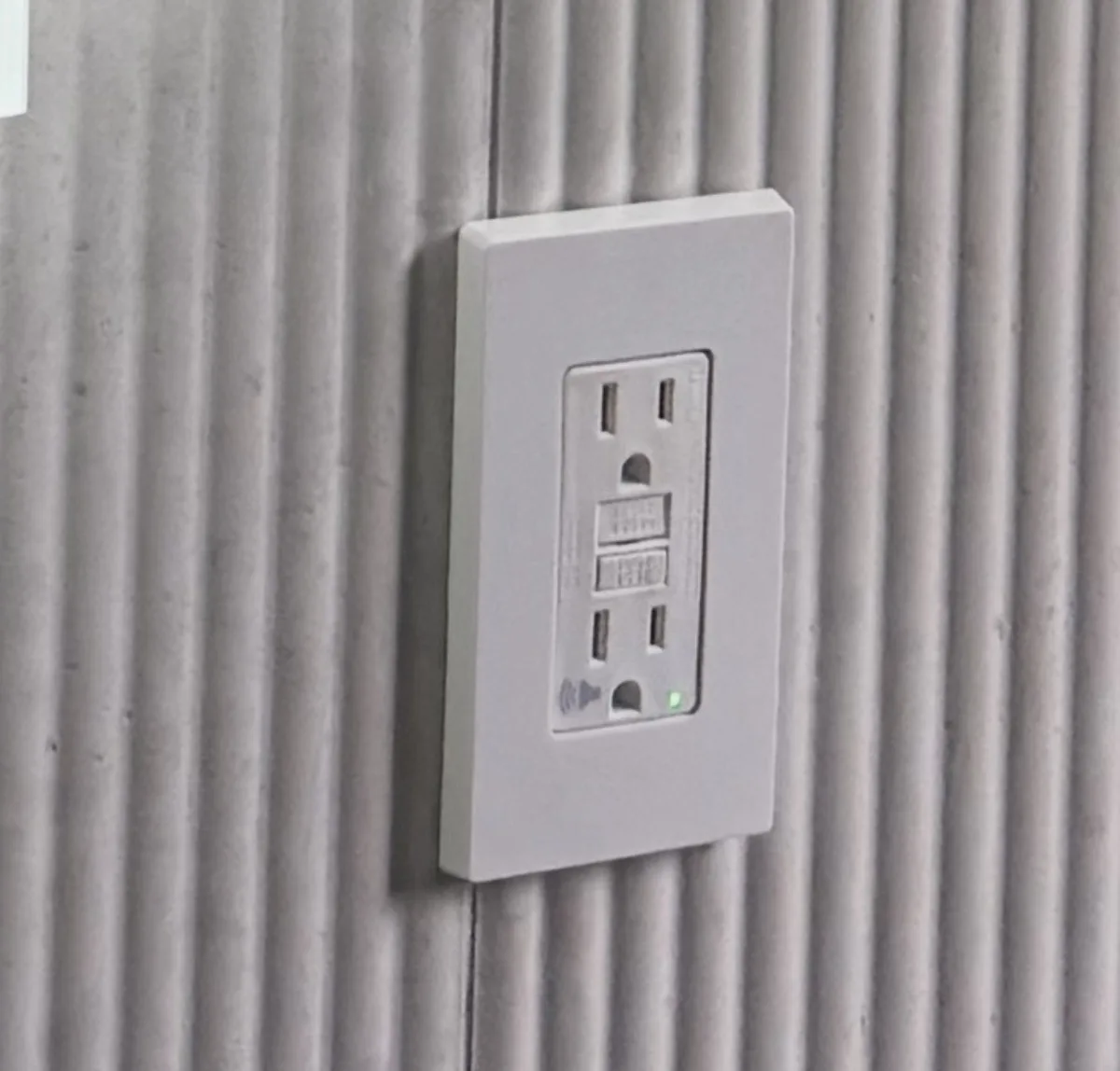
If you’ve ever pushed a little “RESET” button on a bathroom or kitchen outlet to get your hair dryer working again, you’ve used a GFCI outlet. It’s one of the most important safety devices in your home — and NYC electrical code requires them in specific locations for good reason. Here’s what a GFCI outlet actually does, where the code says you need one, and how to tell when yours is failing.
What is a GFCI outlet?
GFCI stands for Ground-Fault Circuit Interrupter. It’s an outlet (or breaker) that constantly compares the current flowing out to a device with the current coming back. If it detects even a tiny imbalance — as little as 4 to 6 milliamps — it means electricity is escaping along an unintended path, such as through water or through a person. The GFCI reacts in a fraction of a second, cutting power before that current can cause a serious or fatal shock.
That speed is the whole point. A standard breaker only trips on a large overload or short circuit; it won’t react to the small leakage current that can stop a heart. A GFCI is built specifically to catch that scenario — which is why the code requires them anywhere water and electricity can meet.
GFCI outlet vs. a regular outlet
The easiest way to spot a GFCI outlet is the pair of buttons on its face: TEST and RESET. Press TEST and the outlet should cut power; RESET restores it. A regular outlet has no buttons and no built-in protection. One GFCI can also protect other “downstream” outlets wired after it — which is why a tripped GFCI in your bathroom can sometimes kill an outdoor or garage outlet on the same circuit.
Where NYC code requires GFCI protection
The NYC Electrical Code (based on the National Electrical Code) requires GFCI protection anywhere an outlet is near water or in a damp or outdoor location. In a typical NYC home that means:
- Bathrooms — all outlets
- Kitchens — outlets serving the countertop
- Outdoors — stoops, patios, rooftops, and any exterior outlet
- Garages and unfinished basements
- Laundry areas and utility sinks
- Anywhere within 6 feet of a sink or other water source
If you’re renovating, selling, or getting an electrical safety inspection, missing GFCI protection in these spots is one of the most common issues flagged. Adding it is straightforward for a licensed electrician — see our GFCI outlet installation service.
GFCI vs. AFCI: what’s the difference?
They sound similar but guard against different dangers. A GFCI protects people from shock by detecting current leaking to ground. An AFCI (Arc-Fault Circuit Interrupter) protects against fires by detecting dangerous arcing in damaged or loose wiring — and NYC code now requires AFCI protection on many bedroom and living-area circuits. Newer installations often use combination devices that do both jobs at once.
Why GFCIs matter in older NYC homes
Many pre-war NYC apartments and brownstones still have ungrounded, two-prong outlets. Here’s the useful part: a GFCI can be installed on an ungrounded circuit and still provide shock protection — the code even allows it as a way to safely update old two-prong outlets to three-prong (the outlet must be labeled “No Equipment Ground”). It’s a common, affordable upgrade in older buildings that aren’t ready for a full rewire yet.
Signs your GFCI needs attention
- It won’t RESET, or won’t stay reset
- It trips constantly — a sign of a real ground fault, moisture, or a failing device
- The TEST button does nothing — the GFCI may be dead and no longer protecting you
- The outlet is warm, discolored, or has no power at all
GFCIs wear out — most should be replaced roughly every 10 years, or immediately if the TEST button stops working. If yours trips repeatedly, don’t just keep resetting it; that behavior usually means it’s doing its job and there’s a fault to find. Our electrical repair team can track it down.
Do you need a licensed electrician?
Swapping a like-for-like outlet is minor, but GFCI work touches your home’s most safety-critical circuits — and getting the line/load wiring backwards leaves outlets unprotected. New circuits or added outlets require a DOB electrical permit and a NYC-licensed electrician. For code-compliant protection you can rely on, it’s worth having a licensed electrician handle it.
Need GFCI outlets installed or a tripping one diagnosed? Call AE Electric at (646) 846-0008. We’re licensed, insured, and offer same-day service across all five boroughs.
Related reading: If you are updating outlets, our guide to how AFCI breakers protect against wiring fires.
Frequently Asked Questions
How can I tell if an outlet is a GFCI?
Look for the two small buttons on the face of the outlet marked TEST and RESET. If they are there, it is a GFCI. Pressing TEST should cut the power, and RESET restores it — a quick way to confirm the device still works.
Where does NYC code require GFCI outlets?
Anywhere near water or in a damp or outdoor location: bathrooms, kitchen countertop outlets, outdoor and rooftop outlets, garages, unfinished basements, laundry areas, and generally any outlet within 6 feet of a sink.
Why does my GFCI outlet keep tripping?
Usually because it is doing its job — it senses a real ground fault. Common causes are moisture in an outdoor or bathroom outlet, a faulty appliance plugged into the circuit, a downstream wiring fault, or a GFCI that has worn out. If it trips repeatedly after resetting, have a licensed electrician find the fault rather than forcing it to stay on.
Can a GFCI outlet work without a ground wire?
Yes. A GFCI provides shock protection even on an ungrounded two-wire circuit, and the code allows it as a safe way to update old two-prong outlets in pre-war NYC homes to three-prong — the outlet just has to be labeled "No Equipment Ground."
How often should GFCI outlets be replaced?
Roughly every 10 years, or sooner if the TEST button no longer cuts the power — that means the protection has failed even though the outlet still delivers electricity. Testing your GFCIs monthly is a good habit.