
New Yorkers love a pre-war apartment — the plaster walls, the high ceilings, the solid bones. What’s behind those walls is another story. Buildings from the 1900s–1940s were wired for a world with a few lamps and a radio, not central air, EV chargers, and a kitchen full of appliances. If you own or are buying a pre-war co-op, condo, or brownstone apartment in NYC, here are the electrical problems you’re most likely to run into — and how a licensed electrician actually fixes them.
Curious how old your building is, and what electrical work has been filed for it? You can look up any NYC address with our free Building Electrical Report.
Why pre-war apartments have electrical problems
The wiring in most pre-war NYC buildings was installed for a fraction of today’s electrical load. A 1920s apartment might have been built with 30 amps of service and two-wire, ungrounded circuits — fine for lighting, hopeless for a modern kitchen, window AC units, and home offices. Decades of partial upgrades by different owners then layered new work over old, often without permits. The result is a patchwork that looks fine at the outlet but hides real problems in the walls and at the panel.
The most common pre-war apartment electrical problems
- Ungrounded, two-prong outlets. No ground path means no protection for you or your electronics. In wet areas the code-compliant fix is a GFCI outlet, which protects even on an ungrounded circuit.
- Knob-and-tube or cloth-insulated wiring. Early-1900s wiring with no ground and brittle insulation. It can’t safely handle modern loads and is frequently flagged by insurers and during a sale.
- Undersized service. Many pre-war apartments still run on 30–60 amps. Add a microwave, AC, and a hair dryer and the main trips. See 100-amp vs 200-amp service for what modern living actually needs.
- Too few outlets and overloaded circuits. A pre-war bedroom might have one outlet. Power strips and daisy-chained extension cords are the workaround — and a fire risk.
- No GFCI or AFCI protection. Kitchens, bathrooms, and outlets near water were never required to have it when the building went up; NYC code requires it now.
- Aluminum branch wiring. Common in some mid-century updates; the connections loosen and overheat over time and need proper remediation.
- Unpermitted past work. Prior owners’ undocumented electrical work is one of the most common causes of a DOB/ECB violation that surfaces during a sale or refinance.
Co-op and condo realities
Fixing a pre-war apartment isn’t just about the wiring — it’s about the building. Most co-op and condo boards require an alteration agreement, a certificate of insurance naming the building and managing agent, and sometimes an engineer’s sign-off before electrical work starts. There’s also a hard limit: your apartment can’t draw more than the building’s electrical riser can supply to your line. In some pre-war buildings the riser — not your panel — is the real constraint, and that’s a conversation with the building. A licensed electrician who works in NYC co-ops handles this paperwork as part of the job.
How a licensed electrician fixes them
The right fix depends on what’s behind your walls, but the toolkit is consistent:
- Assessment and, if needed, an electrical safety inspection — panel, service size, wiring type, grounding, and any open permits or violations.
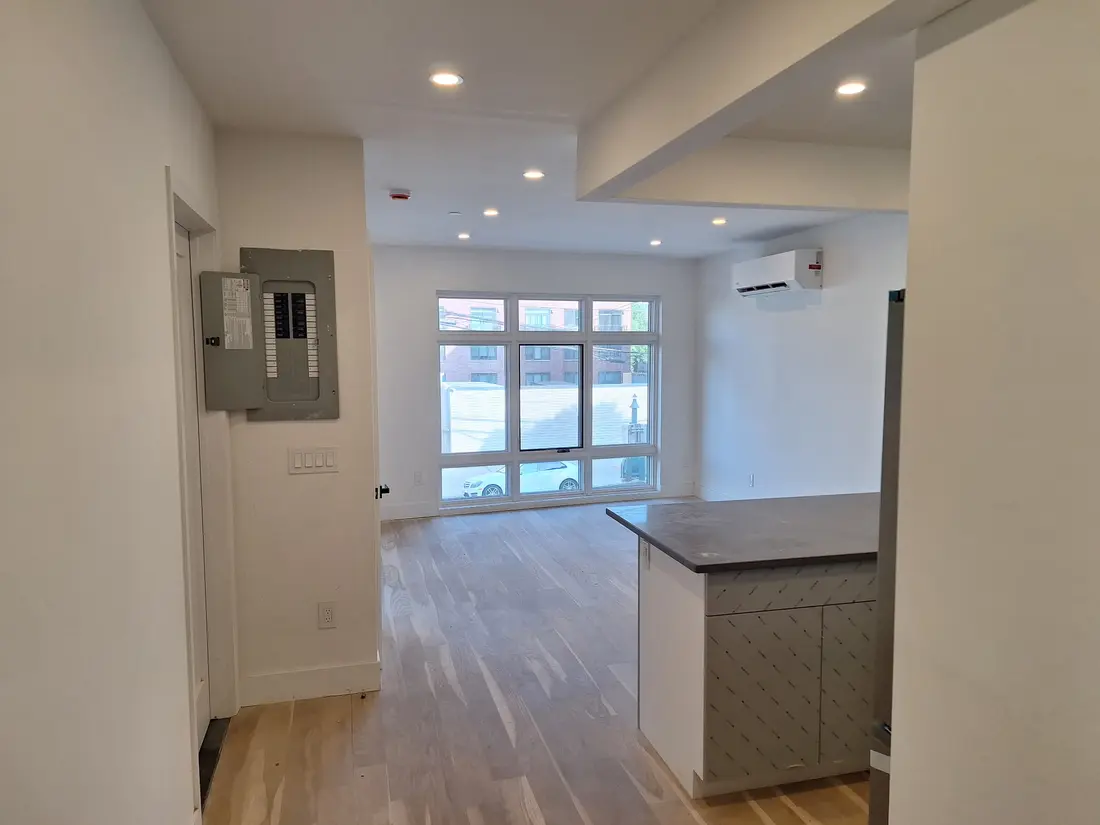
- Panel/service upgrade — bringing a 30–60A apartment up to modern capacity, coordinated with the building and Con Edison. See our panel upgrade service.
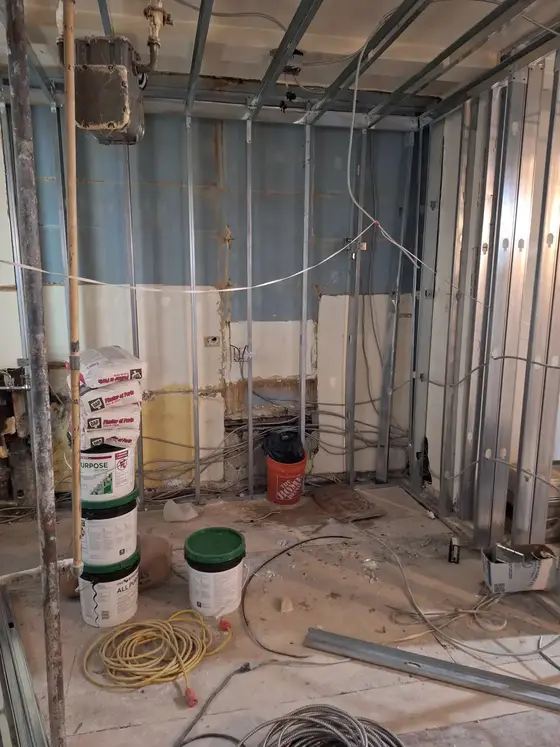
- Rewiring — replacing knob-and-tube, cloth, or aluminum wiring with modern grounded copper. In apartments we minimize wall damage by fishing wire through existing cavities where possible. See house & apartment rewiring.
- Adding circuits and outlets — dedicated circuits for the kitchen, AC, and home office so nothing trips.
- GFCI/AFCI protection and code-compliant devices throughout.
- Permits and sign-off — filed with the DOB and inspected, so the work is legal and won’t haunt a future sale.
Full rewire, or targeted fixes?
Not every pre-war apartment needs a gut rewire. If the service is adequate and only a few circuits are problematic, targeted upgrades — GFCIs, a couple of new circuits, replacing a stretch of old wiring — can be enough. But if you have active knob-and-tube, 30–60A service, and a renovation planned, a full rewire with a panel upgrade is usually the smarter long-term investment. A licensed electrician will tell you honestly which camp you’re in after seeing the panel and a few junction boxes.
Own or buying a pre-war NYC apartment? AE Electric works in pre-war co-ops, condos, and brownstones across all five boroughs — from the Upper West Side to Astoria. Call (646) 846-0008 for a licensed assessment.
Related reading: Updating old circuits usually raises AFCI protection. If your pre-war apartment still has fuses, read fuse box vs circuit breaker. Own a row house rather than an apartment? See brownstone electrical upgrades in Brooklyn. Don’t forget the alarms: NYC smoke, CO, and gas detector laws. Old wiring and space heaters are a risky mix; see winter electrical safety in NYC.
Frequently Asked Questions
How do I know if my pre-war apartment needs rewiring?
Warning signs: two-prong outlets, breakers or fuses that trip when appliances run together, warm outlets, a burning smell, or visible cloth or knob-and-tube wiring in the basement or ceilings. A licensed electrician can confirm after checking the panel and a few junction boxes.
Can you rewire a co-op or condo apartment?
Yes. It requires board approval and a certificate of insurance naming the building, which we handle. The building's riser capacity also sets a hard limit on service size, so we confirm what's available to your line before promising an upgrade.
Is knob-and-tube wiring dangerous?
It becomes unsafe as its insulation ages, it has no ground, and it can't handle modern loads. Insurers frequently flag it and it often surfaces during a sale. It should be replaced with grounded copper, usually alongside a panel upgrade.
Do I need a permit to do electrical work in a pre-war apartment?
Yes, most hardwired work does — new circuits, panel work, and rewiring all require a DOB electrical permit filed by a licensed electrician. Unpermitted work is a common cause of violations that block a sale.
How much does it cost to update a pre-war apartment's electrical?
It ranges widely: targeted fixes such as a few GFCIs and circuits can be modest, while a full rewire with a panel upgrade runs into the thousands, depending on size, access, and whether the building riser needs coordination. We give a flat-rate quote after an assessment.