
Every August we get the same call from apartments all over the city: the window air conditioner and the microwave will not run at the same time, and the breaker keeps going. Nothing is broken. The apartment simply has one 15-amp circuit doing the work of three, and the breaker is the only part of the system telling the truth about it.
The fix is a dedicated circuit — one breaker, one wire, one load, nothing shared. It is one of the most common jobs we do in New York City apartments and brownstones, and one of the most misunderstood. Here is what a dedicated circuit is, when the code requires one, where the space for it comes from, what the permit and approval side looks like in NYC, and what it costs.
What a dedicated circuit actually is
A dedicated circuit is a branch circuit that serves exactly one thing. It starts at its own breaker in your panel, runs as its own cable — electricians call that a home run — to a single outlet or a single hardwired appliance, and stops there. No other outlet, light, or appliance is connected to it anywhere along the way.
Compare that to what most pre-war NYC apartments actually have. A single 15-amp circuit was run decades ago to cover a room or two, back when a room needed a lamp and a radio. Today the same wire feeds a TV, three chargers, a vacuum on the hallway outlet, and a 12-amp air conditioner. The math stops working long before anything looks wrong.
Two details in that diagram matter more than anything else on this page. The first: the breaker is not the problem. A breaker that trips under load is doing precisely what it was installed to do. The second: a bigger breaker is not the fix. Putting a 20-amp breaker on 14-gauge wire lets that wire carry more current than it is rated for, inside a finished wall, with nothing left to stop it. If you have ever found an oversized breaker in an old panel, you have seen the shortcut that causes repeat breaker trips and, occasionally, worse.
Which loads need their own circuit
Some dedicated circuits are required by the New York City Electrical Code — the National Electrical Code as amended for the city. Others are simply the difference between an apartment that works and one that trips. Your electrician confirms the requirements against the code edition in force when the permit is filed, but the list below has been stable for a long time.
Code generally requires a dedicated circuit for
- Kitchen small-appliance circuits — at least two 20-amp circuits serving the countertop receptacles, and they may not feed lighting or other rooms.
- Dishwasher, disposal, and built-in microwave — each on its own circuit, sized to the appliance nameplate.
- Electric range, wall oven, and cooktop — a 240-volt circuit sized to the appliance, typically 40 or 50 amps.
- Electric clothes dryer — a 240-volt, 30-amp circuit; the laundry receptacle itself gets a separate 20-amp circuit.
- Bathroom receptacles — a 20-amp circuit serving bathroom receptacles only, GFCI protected.
- Fixed heating and air-conditioning equipment — through-wall and split-system units, sized per the equipment data plate.
- EV charging equipment — always its own circuit, and never shared. See our EV charger installation service for how that circuit is sized and filed in NYC.
Worth doing even when it is not required
- A window or through-wall AC over about 8 amps. The single most common dedicated-circuit request in NYC, and the one that pays for itself in July.
- A window unit and a space heater on the same wall. Two seasonal 10-plus-amp loads on one old circuit is a breaker trip waiting for a cold night.
- A home office. Not for the load — a workstation draws little — but so the vacuum on the shared hallway outlet cannot take your desk down mid-call.
- Sump pumps, aquariums, medical equipment, freezers. Anything where a nuisance trip while you are out has a real cost.
- Portable induction cooktops and countertop ovens. Increasingly common in small NYC kitchens, and each one is a genuine 12-to-15-amp appliance.
Where the new circuit comes from
This is the part homeowners rarely anticipate. A new circuit needs a place to land in the panel, and it needs the service behind that panel to have room for the load. Those are two different questions, and a good estimate answers both before anyone quotes a price.
A few notes on that sequence, from doing a lot of these in older buildings:
- “There is a gap in my panel” is not the same as a usable space. The blanks you can see behind the cover may not have bus stabs behind them. It takes the cover off to know.
- Tandem breakers are not a universal trick. Only panels whose label permits them can take them, and only in the positions the label names. They add breaker spaces, never capacity.
- A subpanel is often the sensible answer in a brownstone. If the service has headroom on a load calculation, a small subpanel near the work gives you several circuits at once and shortens every future run.
- If the service is full, the service comes first. That is a panel upgrade in a house, and a building question in an apartment. Our guide to 100-amp versus 200-amp service covers how to tell which side of that line you are on.
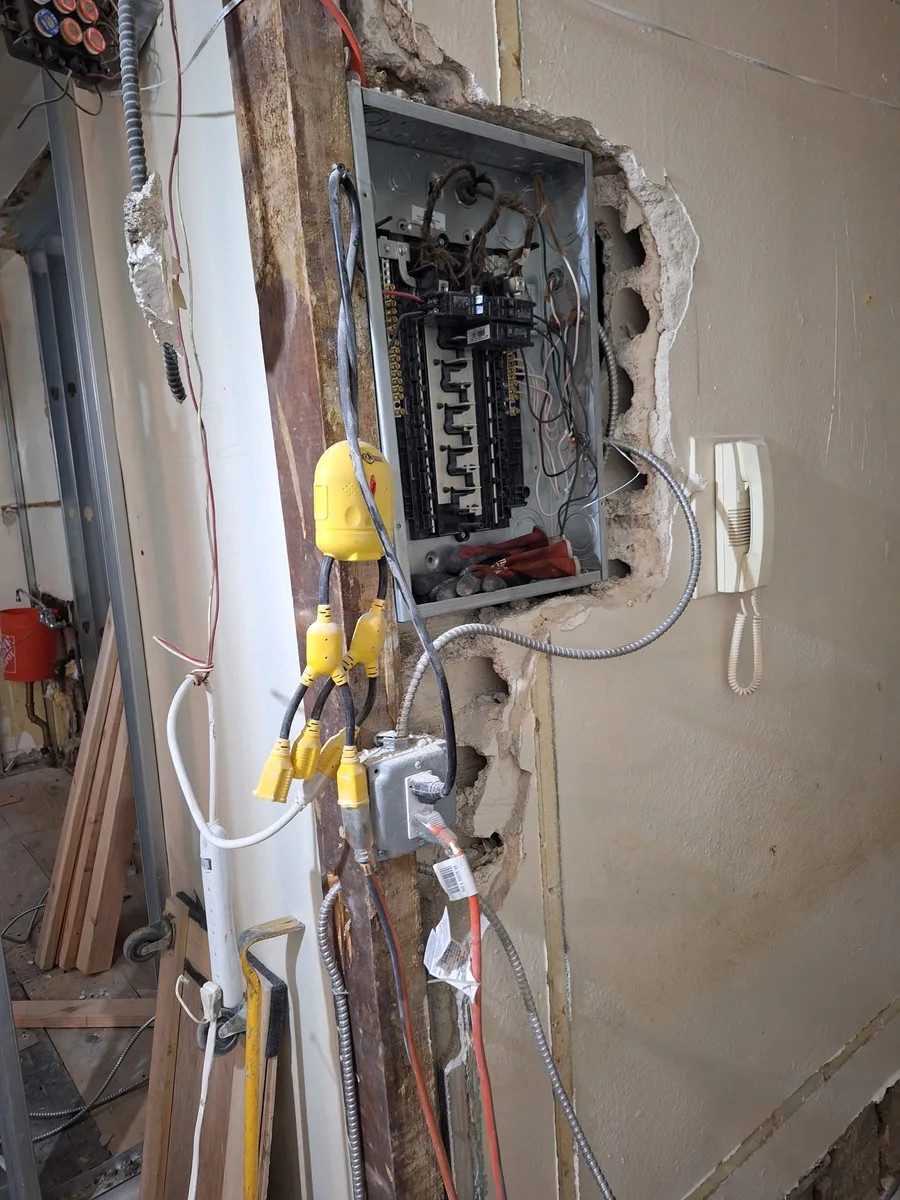
What the job looks like, apartment vs. brownstone
The electrical work is the same in both. What differs is the route the cable takes and how much finished surface has to be opened to get there — and that, not the breaker, is what drives the price.
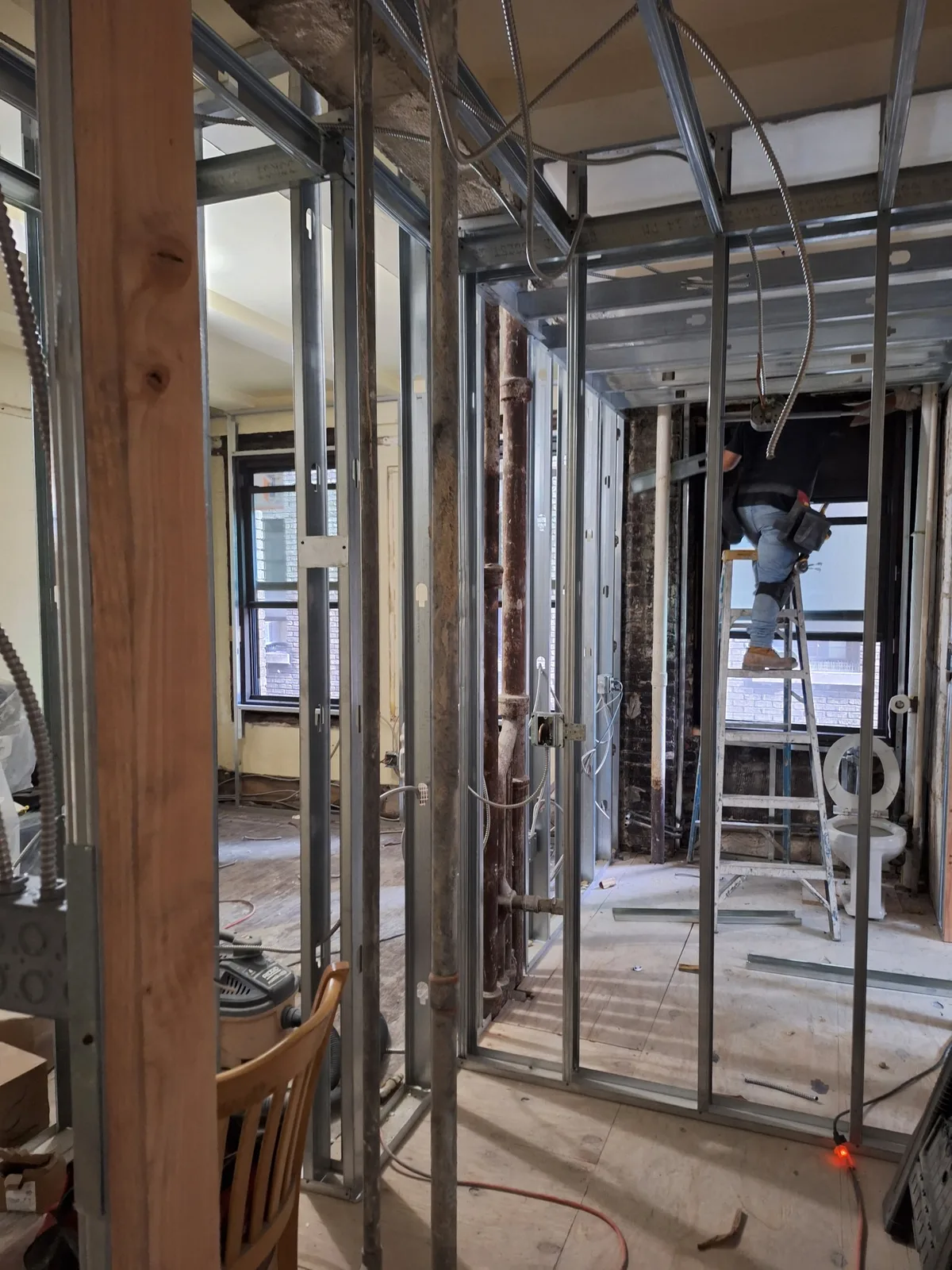
- In an apartment, the panel is usually in a hallway closet or over a door, and the run has to cross plaster walls with no accessible cavity above or below. A short run to an adjacent room can be fished in a day. A run to the far end of a railroad layout may mean surface raceway, a dropped soffit, or opening and patching plaster.
- In a brownstone, there is usually a basement or a cellar ceiling to run through, which makes horizontal distance cheap and vertical distance the hard part. Getting from the cellar to a parlor-floor wall is the step that takes the time.
- In both, the finished job ends with the new breaker labeled, the circuit tested, and the panel directory updated — the same directory covered in our guide to reading your NYC electrical panel.
Permits, inspection, and board approval
A new branch circuit is not a handyman job in New York City. Installing new wiring requires an electrical permit filed by a licensed electrical contractor, and the work is inspected before it is signed off. Our guide to NYC electrical permits covers what does and does not require a filing; adding a circuit is squarely on the “does” side.
Unpermitted circuits create problems that surface later, at the worst time: a failed inspection during a renovation, an open ECB violation, an insurance claim questioned after a fire, or an appraiser and buyer’s attorney asking about work with no sign-off during a sale.
If you are in a co-op or condo, there is one more approval before the permit: the board’s. A new circuit means opening walls and touching building property, which puts it under your alteration agreement in essentially every building. Read what needs board approval in a NYC co-op or condo before you schedule anything — the order is board first, permit second, work third.
What a dedicated circuit costs in NYC
All figures below are estimates for New York City work. The single biggest variable is not the breaker or the wire — it is how far the cable has to travel and how much finished wall, ceiling, or plaster has to be opened and put back.
| Work | Typical NYC Cost |
|---|---|
| New 120V/20A dedicated circuit, short accessible run | $300 – $700 |
| Same circuit, long run in finished pre-war walls | $700 – $1,500 |
| New 240V circuit (AC, range, dryer) | $600 – $1,800 |
| EV charger circuit, installed | $800 – $2,500 |
| DOB electrical filing on small work | $150 – $300 |
| Subpanel added to create new spaces | $800 – $2,000 |
| 100-amp panel upgrade (if the service is full) | $1,800 – $3,000 |
| 200-amp panel upgrade | $2,500 – $5,500 |
Two ways to spend less on the same work. First, bundle: if the walls are open for a renovation, every additional circuit costs a fraction of what it costs as a standalone visit later. Second, ask about the subpanel when you need more than one or two circuits — past that point it is usually cheaper than repeated single runs, and it leaves room for the next thing. For broader pricing across job types, see our NYC electrician cost guide.
Five signs you need one now
- A breaker trips whenever two specific things run at once — the same two, every time.
- Lights dim across a room when the AC or the fridge compressor kicks on.
- A cord, plug, or receptacle is warm to the touch after an appliance runs.
- You are relying on an extension cord or a power strip for an appliance that draws real current.
- You are adding anything the code lists above — a dishwasher, a dryer, an EV charger, a through-wall AC — to an apartment that never had one.
The first three are the circuit telling you it is over capacity. The last two are you adding load to a system that was designed for a different century of appliances.
Adding a circuit the right way, in any borough
AE Electric adds dedicated circuits in apartments, brownstones, and townhouses across all five boroughs. We take the cover off before we quote, so the estimate reflects the panel you actually have; we file the permit; and we leave the panel directory correct so the next electrician — or the next buyer’s inspector — can read it. If your building needs an alteration package, we produce the insurance certificates, load calculations, and filings boards ask for.
Licensed, insured, and permitted work. Call (646) 846-0008 or request an estimate and tell us what keeps tripping.
Frequently Asked Questions
What is a dedicated circuit?
A branch circuit that serves exactly one thing: its own breaker in the panel, its own cable running to a single outlet or hardwired appliance, and nothing else connected to it anywhere along the way. That is what keeps one heavy appliance from competing with everything else in the room for the same wire.
Do you need a permit to add a circuit in NYC?
Yes. Installing new wiring in New York City requires an electrical permit filed by a licensed electrical contractor, and the work is inspected before sign-off. Unpermitted circuits tend to surface later as failed inspections, ECB violations, or questions from a buyer during a sale.
How much does a dedicated circuit cost in NYC?
As an estimate, a new 120-volt 20-amp circuit on a short accessible run commonly runs $300 to $700, and $700 to $1,500 when the cable has to cross finished pre-war walls that must be opened and patched. A 240-volt circuit for an air conditioner, range, or dryer typically runs $600 to $1,800, plus $150 to $300 for the DOB filing.
Can I add a circuit if my electrical panel is full?
Sometimes. If the panel label permits tandem breakers, one can free a space, though that adds room for a breaker and not capacity. If a load calculation shows the service still has headroom, a subpanel adds several spaces at once. If the service itself is maxed out, it has to be upgraded first, which in an apartment is a building decision about the riser.
Does a window air conditioner need its own circuit?
A through-wall or fixed air-conditioning unit is treated as fixed equipment and gets a circuit sized to its data plate. A plug-in window unit is not always required to have one, but any unit drawing more than roughly 8 amps on a shared pre-war circuit is the most common reason we get called about a breaker that trips every summer.
Can my co-op or condo board stop me from adding a circuit?
In practice, yes. Adding a circuit means opening walls and touching building property, which puts the job under your alteration agreement in essentially every NYC building. Board approval comes first, then the DOB filing, then the work.