
If your building went up before about 1945 — which describes most of Park Slope, Bed-Stuy, Harlem, the Upper West Side, and a great deal of Queens — there is a real chance that some of the wiring behind your plaster is knob and tube. Not all of it, usually. That is the part people get wrong. Knob and tube rarely survives as a whole system; it survives in pockets, feeding a ceiling fixture in a back bedroom or a closet light nobody thinks about, quietly connected to a panel that was replaced three owners ago. Here is how to tell whether you have it, what it actually means, and what to do about it.
What knob and tube wiring actually is
Knob and tube was the standard method for wiring American buildings from the 1880s until roughly the 1940s. Instead of running the hot and neutral together inside one jacket the way every modern cable does, it runs them as two separate single conductors, held several inches apart in open air by white ceramic knobs nailed to the framing. Where a wire has to pass through a joist or stud, it goes through a ceramic tube so the wood never touches the conductor. Splices were twisted, soldered, and wrapped in cloth friction tape, out in the open, with no junction box around them.
It was a genuinely good system for its era. The air gap was the insulation, and the porcelain kept everything off combustible framing. Two things about it matter enormously today, though: there is no ground conductor anywhere in the system, and the insulation on the conductors is rubber and cloth, which does not last a century.
Which NYC buildings still have it
Rough rule: if the building predates 1930, it was almost certainly wired with knob and tube originally. Whether any of it is still energized depends entirely on what happened in the ninety years since. The buildings where we still find live knob and tube in 2026 fall into a few recognizable groups:
- Brooklyn and Harlem brownstones that were never gut renovated. Owner-occupied for decades, updated room by room. The parlor floor got redone in 1998; the top floor did not.
- Two- and three-family houses in Queens and Brooklyn where the service and panel were upgraded but the branch circuits upstairs were left alone.
- Pre-war co-ops and rentals where the apartment was “renovated” cosmetically — new kitchen, new bath, new floors — while the original ceiling-fixture circuits stayed in the plaster.
- Anywhere with a finished basement or attic added without permits, where new work was tapped onto old wiring rather than run from the panel.
What almost never happens is a full building that is still entirely knob and tube. By now, some of it has been replaced. The risk is in the mix — a panel from 2006 feeding conductors from 1912.
How to spot it without opening a wall
You do not need to demolish anything to get a strong indication. Look in the places where framing is already exposed and at the fittings you touch every day:
- Unfinished basement or cellar ceiling. The clearest tell. White porcelain knobs nailed to the joists, with two black cloth-covered wires running parallel a few inches apart. If they are there and warm to nothing — they may still be live.
- Attic or crawlspace floor. Same fittings, often buried under later blown-in insulation, which is its own problem.
- Two-prong outlets. Not proof on their own, but a house full of ungrounded two-slot receptacles means ungrounded circuits, and knob and tube is the oldest reason for that.
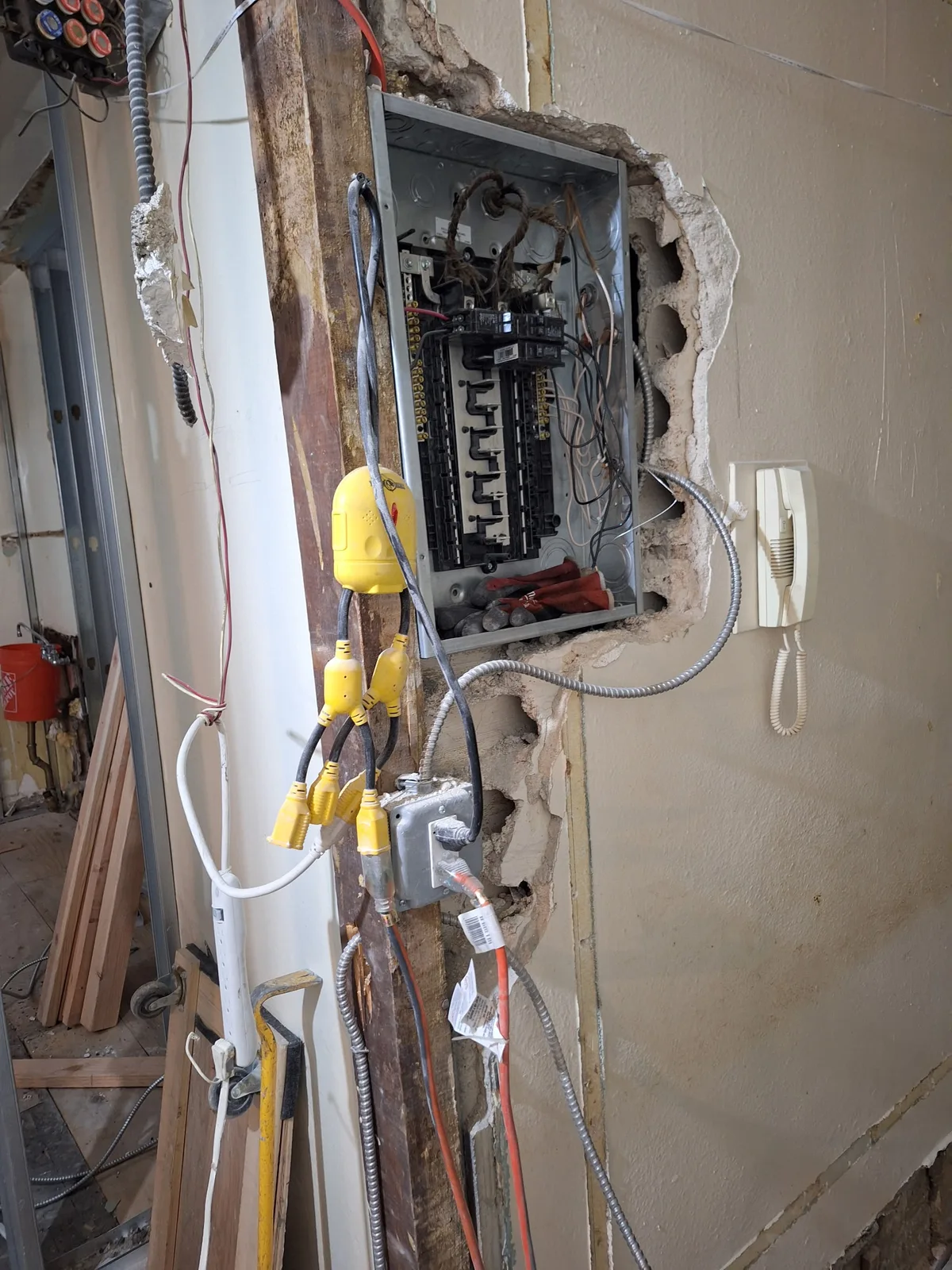
- Cloth-jacketed wire entering the panel. Fabric or crumbling rubber insulation on the conductors landing on breakers, rather than modern plastic-jacketed cable, points to original-era wiring somewhere in the system.
- Push-button light switches or original brass ceiling boxes with no ground screw.
- A DOB or ECB filing history that shows no electrical permit ever pulled for the floor in question.
What not to do: do not pull on it, do not open a ceiling box to look, and do not assume a dead-looking wire is dead. Original conductors have brittle insulation that cracks when moved, and knob and tube is frequently still energized from a circuit you have not identified. If you want a definitive answer, an electrical safety inspection maps what is live and what is abandoned.
Why it is a problem now — and it is not because it is old
Knob and tube installed correctly and left completely undisturbed is not, in itself, an emergency. Almost none of it in New York has been left undisturbed. These are the actual failure modes, in the order we see them:
- The insulation has aged out. Rubber and cloth become brittle and flake off, especially where heat concentrates — inside ceiling fixture boxes, at splices, near old incandescent cans. Bare conductor a few inches from framing is the classic knob-and-tube fire.
- Someone buried it in insulation. The system sheds heat into open air by design. When a homeowner or a weatherization contractor blows cellulose over attic runs, that heat has nowhere to go. This is a well-documented fire cause and the reason most codes prohibit covering it.
- It was extended by an amateur. Modern cable spliced to knob and tube with a wire nut in the joist bay, no box, no ground. We find this on nearly every job. The splice becomes the hot spot.
- There is no ground. Nothing to clear a fault, nothing for surge protection to reference, and no legal way to install a standard three-prong outlet on the circuit. It also means any modern appliance with a grounded plug is not actually protected.
- The circuits are overloaded. These circuits were sized for a couple of lamps. They now run window AC units, microwaves, and space heaters. If your breaker keeps tripping, aging undersized circuits are a common reason.
- Rodent damage. Open conductors in a joist bay with no jacket are exactly what mice chew.
Is knob and tube legal in New York City?
Existing knob and tube is not automatically illegal. The NYC Electrical Code does not require you to tear out wiring that was code-compliant when installed, as long as it is intact, undisturbed, and not covered by insulation. What you cannot do is extend, modify, or add to it. Any new circuit, any new outlet, any new fixture location has to be run in modern cable from the panel — and once a room is opened for renovation, the practical answer is almost always to replace what is in it.
Where it stops being a paperwork question and starts costing money is at three specific moments:
- Selling. A buyer’s inspection report that says “active knob and tube observed” becomes a price negotiation, every time.
- Insuring. Several carriers will not write a new homeowners policy on a house with active knob and tube, and others surcharge it or require a licensed electrician’s letter certifying its condition. If your carrier asks and you answer wrong, a later claim can be contested.
- Renovating. A permitted job that touches the circuits pulls the whole thing into the current code, and the inspector will see it.
For landlords there is a fourth: tenant-occupied units carry habitability obligations, and a documented electrical hazard you knew about is a bad position to be in. If a violation has already been issued, that is a separate process — see how ECB electrical violations get resolved.
What replacing it actually involves
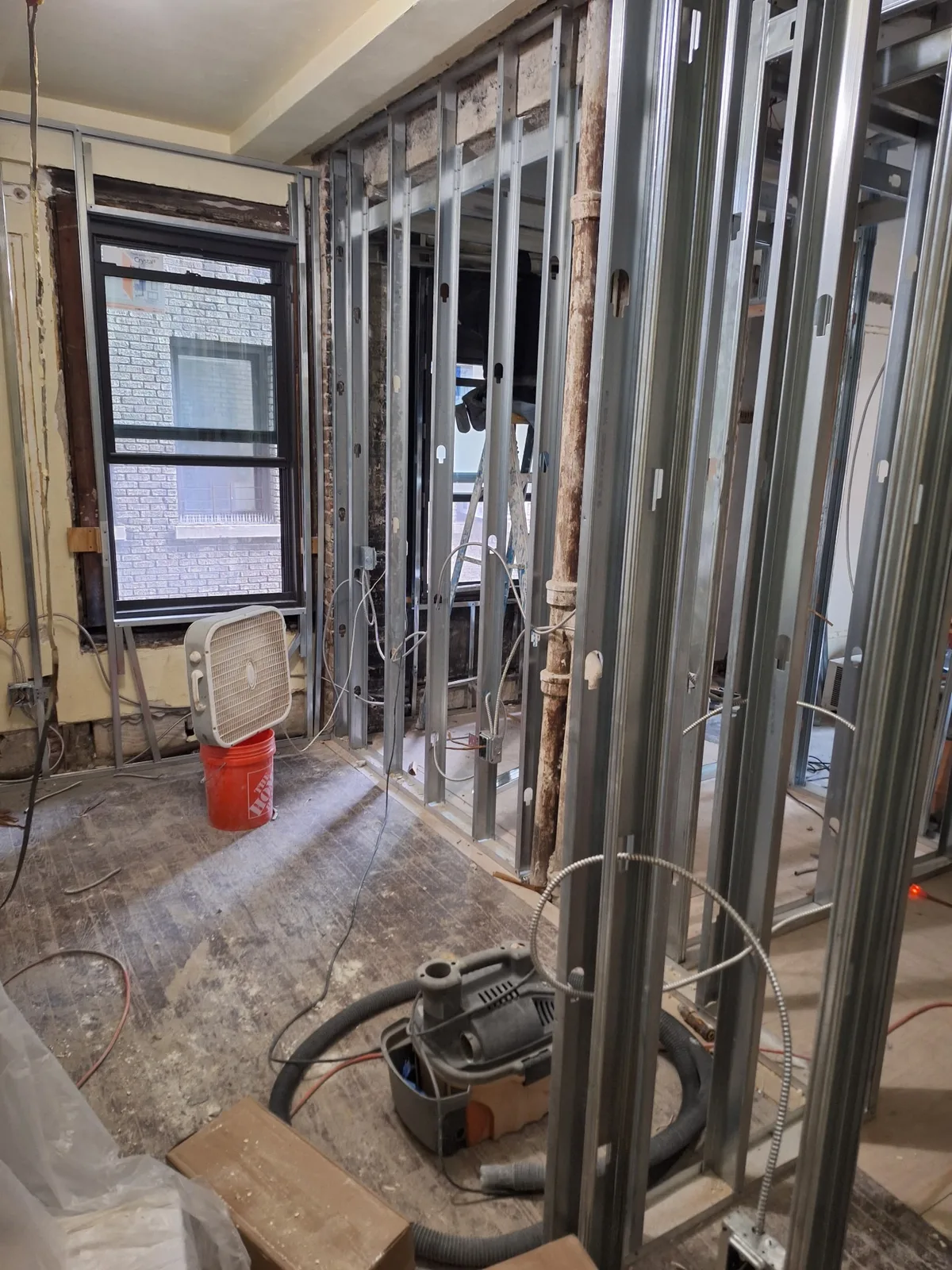
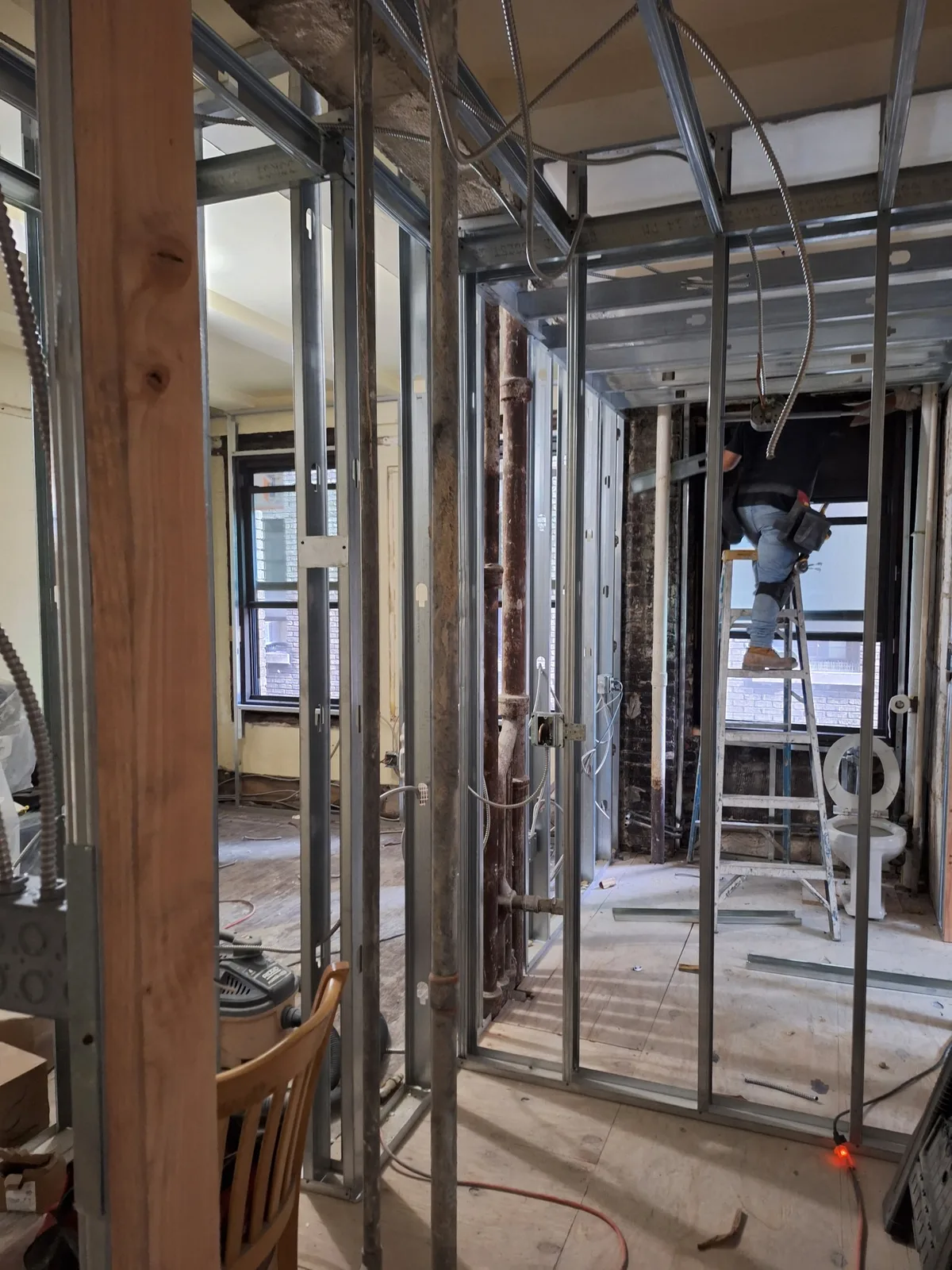
Replacement means abandoning the old conductors in place — they are woven through plaster and cannot simply be pulled — and running entirely new grounded circuits from the panel to every device. In NYC that is permitted work: filed with the DOB, performed by a licensed electrician, inspected at the end.
The three things that decide the price of a knob-and-tube replacement in New York are all about access, not about the wire itself:
- Plaster versus drywall. Fishing cable through pre-war plaster and lath without wrecking it is slow, skilled work, and plaster repair is a separate trade that is not in the electrical quote.
- Whether the walls are already open. A rewire folded into a gut renovation costs a fraction of the same rewire in a finished, furnished home.
- The panel. A knob-and-tube house nearly always has a 60A or 100A service, or a fuse box. Grounded circuits need somewhere to land, so a panel upgrade is part of the job, typically adding $2,500–$5,000.
As a planning figure, a full brownstone floor or townhouse rewire runs $15,000–$40,000+ in the 2026 NYC market, and a knob-and-tube building with plaster walls sits at the top of that range. Apartment-scale work is lower. The full breakdown, including permit fees and what is excluded from a typical quote, is in our NYC house rewiring cost guide. One item worth knowing early: if the old wiring is wrapped in asbestos-containing insulation, which is not unusual in buildings of this vintage, abatement has to happen before the electrical work and is priced separately.
A phased approach is legitimate when a full rewire is not affordable at once. The order we recommend is: panel and service first, then the circuits serving kitchens, bathrooms, and any bedroom running an air conditioner, then general lighting last. What is not legitimate is replacing outlets with three-prong receptacles on ungrounded knob-and-tube circuits and calling it done — that hides the problem behind a plug that now looks safe.
If you think you have it, do this
- Look at the basement and attic joists with a flashlight, photograph what you see, and touch nothing.
- Have a licensed electrician confirm what is live, what is abandoned, and how much of the building it feeds. That answer changes the whole conversation.
- Take blown-in insulation off any covered runs as a priority — that is the fastest-acting hazard.
- Stop plugging high-draw appliances into the affected circuits until they are replaced.
- Ask your insurer, in writing, what they require. Then plan the replacement around whichever comes first: their deadline, your renovation, or a sale.
Not sure what is behind your walls? AE Electric inspects, documents, and replaces knob-and-tube wiring across all five boroughs — permitted, inspected, and phased to a budget where that makes sense. See our house rewiring service or call (646) 846-0008 for a licensed opinion on what you are looking at.
Related reading: Knob-and-tube is often paired with a fuse box; see fuse box vs circuit breaker. For row houses, see brownstone electrical upgrades in Brooklyn.
Frequently Asked Questions
Is knob and tube wiring illegal in New York City?
No. Existing knob and tube that is intact, undisturbed, and not buried in insulation is not required to be removed under the NYC Electrical Code. What is not permitted is extending, modifying, or adding to it — any new circuit, outlet, or fixture must be run in modern grounded cable from the panel. Once a room is opened for permitted renovation work, replacement is almost always the practical outcome.
How do I know if my NYC home has knob and tube wiring?
Look at the joists in an unfinished basement, cellar, or attic with a flashlight. Knob and tube shows as two black cloth-covered wires running parallel a few inches apart, held on white porcelain knobs, passing through ceramic tubes where they cross framing. Two-prong outlets throughout the home and cloth-jacketed wire landing in the panel are supporting signs. Do not pull on or open anything — have a licensed electrician confirm what is live.
Is knob and tube wiring dangerous?
Correctly installed and genuinely undisturbed, it is not an immediate emergency. In practice it is rarely undisturbed. The real hazards are brittle rubber and cloth insulation that flakes off with age, blown-in insulation covering runs that were designed to shed heat into open air, amateur splices made without junction boxes, circuits carrying far more load than they were sized for, and the complete absence of a ground conductor.
Can you put insulation over knob and tube wiring?
No. The system relies on open air to dissipate heat, so covering it with blown-in or batt insulation traps that heat against the conductors and is a documented fire cause. If insulation has already been added over knob and tube in an attic, removing it is the fastest-acting fix while you plan the rewire.
Can I get homeowners insurance with knob and tube wiring?
It depends on the carrier. Some will not write a new policy on a home with active knob and tube, others apply a surcharge, and others will write it only with a licensed electrician's letter certifying the condition of the wiring. Answer any carrier question about it accurately — a claim can be contested later if the wiring was misrepresented.
How much does it cost to replace knob and tube wiring in NYC?
Cost is driven by access rather than by the wire. A full brownstone floor or townhouse rewire runs roughly $15,000–$40,000+ in the 2026 NYC market, with knob-and-tube homes with plaster walls at the top of that range; apartment-scale work is lower. A panel upgrade is nearly always required and adds about $2,500–$5,000, and DOB permit fees run $200–$800. Plaster repair, painting, and any asbestos abatement are priced separately.