
You reset the breaker, the power comes back, and ten minutes later everything goes dark again. A circuit breaker that keeps tripping isn’t being annoying — it’s doing its job. Tripping is how a breaker protects your wiring from overheating and starting a fire, so a breaker that won’t stay on is telling you something on that circuit needs attention. Here are the five most common reasons a circuit breaker keeps tripping in NYC homes, what you can safely check yourself, and when it’s time to call a licensed electrician.
What a tripping breaker is actually telling you
Every breaker is rated for a specific amount of current — usually 15 or 20 amps on the general circuits in a NYC apartment or brownstone. When the current on that circuit climbs past the rating, or when electricity finds a dangerous shortcut, the breaker snaps off to cut the flow before the wire behind your wall gets hot enough to be a problem. So the question is never “how do I make it stop tripping?” — it’s “what is making it trip?” Nail down the cause and the fix follows.
The 5 most common reasons a circuit breaker keeps tripping
1. The circuit is overloaded
This is by far the most common cause. Too many things are drawing power on one circuit at the same time — a space heater and a microwave and a hair dryer all fighting over a single 15-amp line. NYC apartments are notorious for this because pre-war wiring put very few circuits in each unit, so one breaker can feed half your rooms. How to tell: the breaker trips when you turn on a specific high-draw appliance, or when several are running together. The fix: unplug some devices and spread heavy loads across different circuits. If a room routinely trips, you likely need a dedicated circuit added at the panel.
2. A short circuit
A short circuit happens when a hot wire touches a neutral wire directly, sending a surge of current through the circuit. It trips the breaker instantly and hard. How to tell: the breaker trips the moment you reset it, or when you plug in one particular device; you may notice a burning smell, discoloration around an outlet, or a buzzing sound. The fix: this is not a DIY repair. A short means a damaged wire, a failing device, or a bad connection somewhere on the circuit, and it needs a licensed electrician to trace and correct. Stop using the circuit until it’s inspected.
3. A ground fault
A ground fault is similar to a short, but the hot wire is contacting a grounded part of the system — a metal box, a ground wire, or water. These are especially common in kitchens, bathrooms, basements, and outdoor outlets, which is exactly why NYC code requires GFCI outlet protection in those areas. How to tell: the trip happens near water or in a damp spot, or a GFCI outlet’s test button keeps popping. The fix: a tripping GFCI is often protecting you from a genuine fault — moisture in an outlet or a failing appliance. Replace a worn GFCI, keep outlets dry, and have persistent trips traced by an electrician.
4. A failing or faulty breaker
Breakers wear out. After years of tripping and resetting — or from age, heat, and corrosion — a breaker can become weak and start tripping below its rated load, or fail to trip at all. How to tell: the breaker trips with little or nothing plugged in, feels loose or warm, or won’t reset firmly into the “on” position. The fix: the breaker itself needs to be replaced with a properly matched one — the same brand and rating the panel is designed for. This is quick work for a licensed electrician but not a place to improvise; the wrong breaker is a real hazard. See our circuit breaker repair service for what’s involved.
5. An undersized or outdated electrical panel
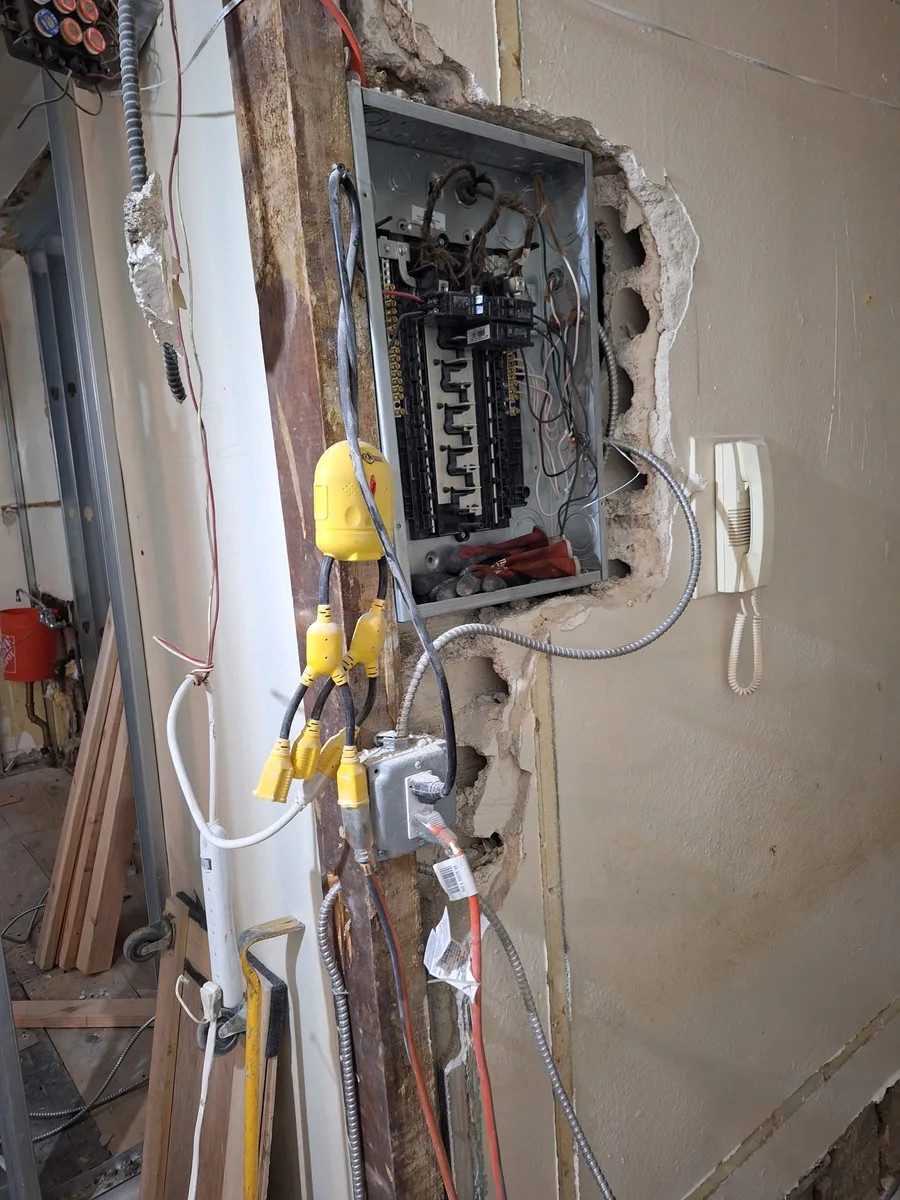
Sometimes the breaker isn’t the problem — the whole panel is undersized for how you actually live. Many pre-war NYC apartments and brownstones still run on 60–100 amps with a panel full to capacity, so modern loads like central AC, an induction range, or an EV charger constantly push it over the edge. Old fuse boxes and recalled panels (Federal Pacific, Zinsco) make it worse. How to tell: breakers across the panel trip often, the panel is full with no room to add circuits, or you still have fuses. The fix: an electrical panel upgrade to modern capacity. Not sure what you need? Our guide to 100-amp vs 200-amp service breaks down the right size for a NYC home.

What to do right now: a safe reset
- Turn off and unplug the devices on the affected circuit — especially anything high-draw like a heater, AC, or microwave.
- Reset the breaker fully. Push it firmly to “off” first, then back to “on.” A breaker that won’t stay on has genuinely tripped.
- Add loads back one at a time. If it holds until you plug in one specific device, that device or its outlet is your culprit.
- Stop if it trips instantly, smells like burning, or the breaker is warm. That points to a short, a ground fault, or a failing breaker — not an overload — and the circuit should stay off until it’s inspected.
One note for NYC: if the power loss is bigger than a single circuit — a whole line dead, or the neighbors are out too — the issue may be on Con Edison’s side, not your panel. Check whether it’s just your circuits before assuming it’s the breaker.
When to call a licensed electrician
Resetting a breaker after an obvious overload is fine. Call a licensed electrician when the breaker trips repeatedly with a normal load, trips the instant you reset it, feels warm or looks scorched, or when you smell burning or see discoloration around outlets. Those are signs of a fault in the wiring or panel that only gets more dangerous the longer it’s ignored. A burning smell, sparking, or a hot panel is an emergency — cut the power at the main if you safely can and call an emergency electrician right away.
Breaker keeps tripping and you can’t find the cause? AE Electric traces tripping circuits, replaces failing breakers, and upgrades overloaded panels across all five boroughs. Call (646) 846-0008 for a licensed diagnosis.
Frequently Asked Questions
Why does my circuit breaker keep tripping even with nothing plugged in?
When a breaker trips with little or no load, the cause is usually a short circuit, a ground fault in the wiring, or a worn-out breaker - not an overload. This needs a licensed electrician to trace, because it points to a fault behind the wall or in the panel rather than too many appliances.
Is it safe to keep resetting a tripping breaker?
Resetting once after an obvious overload is fine. But repeatedly resetting a breaker that keeps tripping forces current through a circuit the breaker is trying to protect. If it trips again quickly, leave it off and have it inspected - especially if there's any heat, buzzing, or burning smell.
How do I know if it's an overload or a short circuit?
An overload trips after a few minutes when several things run at once and resets normally afterward. A short circuit trips instantly the moment you reset it or plug in one device, often with a spark, buzz, or burning smell. Shorts are not a DIY fix.
Why do my breakers trip so often in my old NYC apartment?
Pre-war NYC apartments were wired with very few circuits and small panels - often 60-100 amps. Modern appliances, ACs, and electronics easily overload those circuits. The lasting fix is usually adding dedicated circuits or upgrading the panel to modern capacity.
When is a tripping breaker an emergency?
Treat it as an emergency if you smell burning, see sparks or scorch marks, the panel or a breaker feels hot, or the breaker will not stay off. Shut the power at the main if you can do so safely and call an emergency electrician immediately.