


A lot of electrical fires begin where nobody can see them, with a spark inside a wall: a nail that nicked a cable when a picture was hung in 1987, a receptacle whose wire has been working loose from its terminal for years, a lamp cord pinched flat under a bed leg. None of those draw enough current to trip an ordinary breaker. They just arc, and heat, and wait.
An AFCI breaker is the device built to catch exactly that. New York City now requires AFCI protection across most of the living space in a home, under the 2025 NYC Electrical Code that took effect on December 21, 2025 — with one exception written specifically for the city’s apartment buildings. Here is what an AFCI does, which rooms the NYC rule covers, when it applies to a home that is already finished, why they sometimes trip in pre-war wiring, and what adding one costs.
What an arc-fault circuit interrupter actually detects
An arc is electricity jumping a gap it should not be jumping. It happens where a conductor is damaged or a connection is loose, and it runs extremely hot at a single point — hot enough to char the insulation, the wood stud, and the dust around it.
The trouble is that a standard breaker is not looking for heat at a single point. It watches for too much current: an overload, or a dead short. A loose connection arcing inside a bedroom receptacle may be drawing only a few amps, well inside a 15-amp breaker’s rating, so the breaker has no reason to act. An AFCI adds electronics that read the shape of the current. Arcing has a distinctive, ragged signature, and when the AFCI sees it, it opens the circuit even though the amperage is normal.
It catches both kinds of arc that matter in a home:
- Series arcs — along a single wire, at a loose terminal, a failing backstab connection, or a conductor partly broken inside a cord that has been bent too many times.
- Parallel arcs — between two wires, where insulation has been crushed, chewed, or pierced by a nail or a staple.
The type the code calls for at the panel is the combination AFCI, meaning it watches for both.
AFCI vs. GFCI, in one paragraph
They protect against different dangers and are not substitutes for each other. A GFCI outlet protects people from shock, by tripping when current leaks to ground — through water, or through you. An AFCI protects the building from fire, by tripping on arcing. That is why the code puts GFCIs in bathrooms, kitchens near the sink, and outdoors, and AFCIs in bedrooms and living space. Where a circuit needs both, a dual-function breaker does both jobs in one slot.
Where the 2025 NYC Electrical Code requires AFCI protection
New York City writes its own electrical code. The version in force now, the 2025 NYC Electrical Code, adopts the 2020 edition of the National Electrical Code and layers the city’s own amendments on top. It applies to electrical work filed with the Department of Buildings on or after December 21, 2025; work filed before that date was reviewed under the older 2011 NYC code.
The city kept the national AFCI rule in place. In a dwelling unit, every 120-volt, 15- and 20-amp branch circuit that supplies outlets or devices in these areas needs AFCI protection:
- Bedrooms
- Living rooms, family rooms, dining rooms, parlors, libraries, and dens
- Sunrooms and recreation rooms
- Hallways and closets
- Kitchens and laundry areas
- Any similar room or area
“Outlets” in code language includes lighting outlets, not just receptacles. A bedroom’s ceiling light and its hardwired smoke alarm are on the same footing as the plug by the bed.
The NYC exception for apartment buildings over three stories
This is the part of the rule that exists only in New York City. The city added an exception to the AFCI section: in multifamily dwellings greater than 3 stories, AFCI protection is not required for
- all receptacle outlets in kitchens, and
- receptacle outlets in laundry areas that supply laundry equipment — washers, dryers, and leak-detection equipment.
The exception is narrower than it first sounds. It covers kitchen receptacles, not kitchen lighting. And in the laundry area it covers only the outlets feeding the machines; the code says outright that a convenience outlet where someone might plug in an iron or a steamer still needs AFCI. A private house, a brownstone, or a walk-up of three stories or fewer gets the full national rule with no kitchen or laundry exception at all.
Two rooms are missing from the list on purpose. Bathrooms and outdoor or garage outlets are not AFCI locations; they are governed by the GFCI rules instead, because the danger there is water and shock rather than a hidden arc.
Does the rule apply to a home that is already wired?
Not by itself. A code change governs new work; it does not require you to go back and retrofit a legally installed apartment just because the rulebook moved. If nobody touches your bedroom circuit, it can keep its standard breaker.
What pulls an existing circuit into the rule is work on it. The code has two triggers that catch homeowners by surprise:
- Extending, modifying, or replacing branch-circuit wiring in one of the listed rooms. Add an outlet to a bedroom wall, move a switch in a renovation, or run new cable to a living-room light, and that circuit needs AFCI protection — either an AFCI breaker at the panel or an outlet-type AFCI at the first receptacle on the circuit. The one exception is a short splice: an extension of the existing wires of 6 feet or less that adds no new outlets or devices.
- Replacing a receptacle in one of the listed rooms. Swapping a worn or cracked outlet in a bedroom is the most common way this comes up. The replacement generally has to be AFCI protected, either by an AFCI receptacle or by an AFCI breaker upstream.
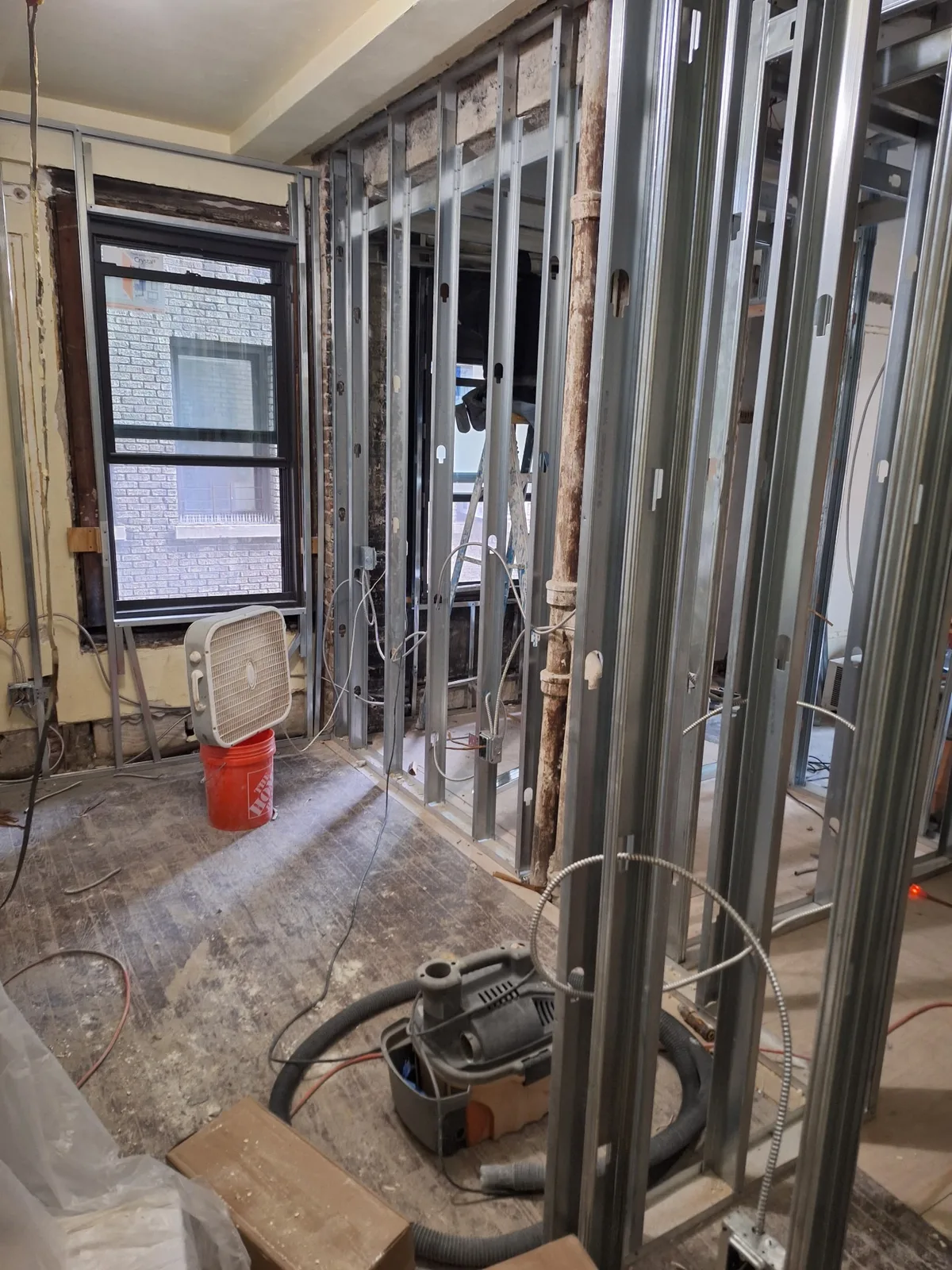
This is why an AFCI line item appears in quotes for renovations that have nothing to do with the panel. A bedroom being opened up for new lighting is a circuit being modified, and the protection comes with it. It is also one more reason to plan circuit work while the walls are open: our guide to NYC electrical permits explains which parts of a renovation get filed and inspected.
Breaker or outlet: the two ways to add AFCI protection
There are two ways to put AFCI protection on a circuit, and they are not equivalent.
An AFCI breaker at the panel replaces the standard breaker and protects the entire circuit, including the home run — the cable from the panel to the first box, often the longest and least-seen stretch of wire in the apartment. It is the cleaner answer whenever the panel will take one.
An outlet-type AFCI (the code calls it an outlet branch-circuit AFCI) installs as the first receptacle on the circuit and protects everything downstream of it. It does not protect the wire between the panel and that first box, which is why the code only accepts it at the first outlet. It earns its place when the panel cannot take an AFCI breaker at all.
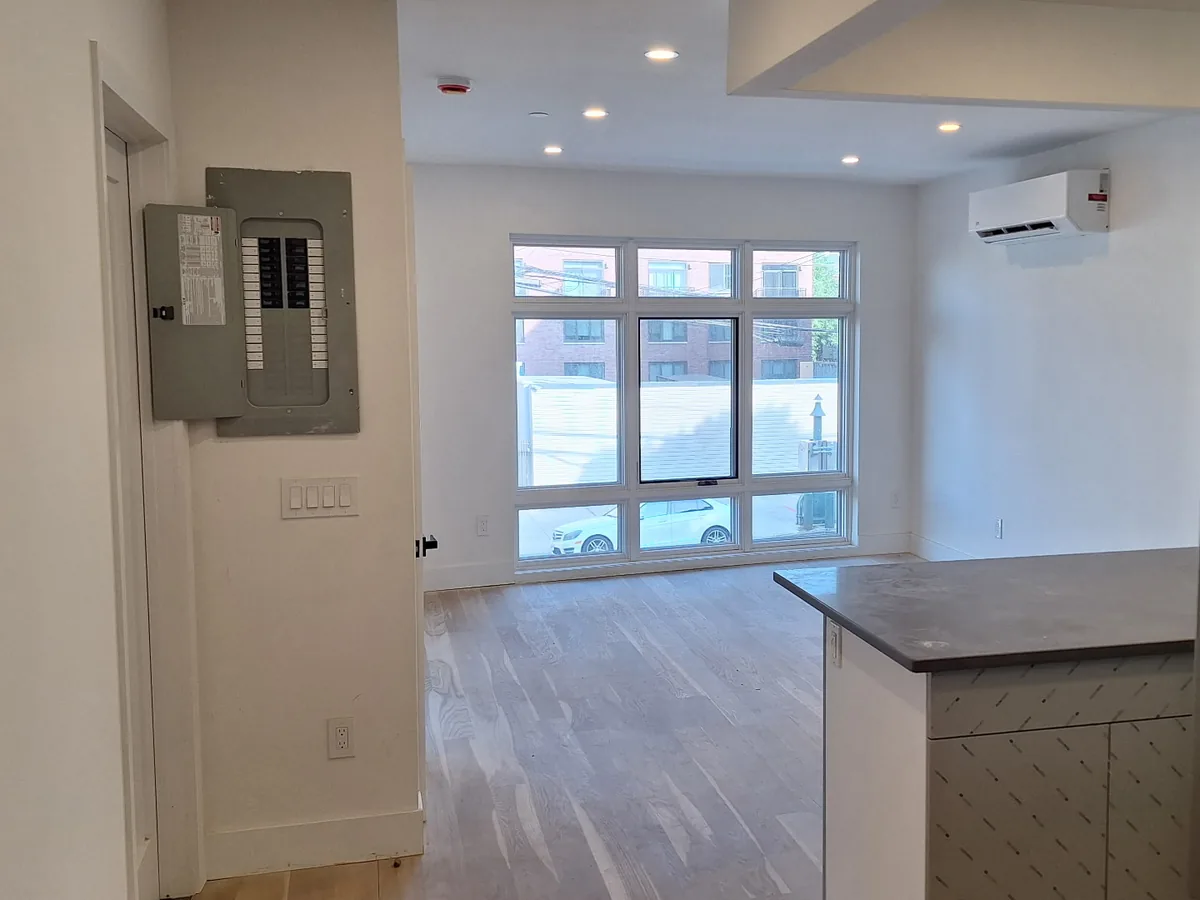
That second case is common in this city. AFCI breakers are made by the panel manufacturer to fit that manufacturer’s bus, and a breaker has to be listed for the panel it goes into. Several of the panels still in NYC basements and closets have no current AFCI breaker available: a Federal Pacific panel, older discontinued brands, and of course a fuse box. In those, the choice is an outlet-type AFCI at the first receptacle now, or an electrical panel upgrade that makes AFCI breakers available on every circuit. If you are not sure what you have, our walkthrough on how to read your electrical panel shows where the brand and the breaker types are printed.
Why AFCIs trip in pre-war NYC wiring
An AFCI that trips is doing one of two things: catching a real problem, or reacting to wiring that was legal decades ago but confuses modern electronics. In older NYC buildings we see both, and the causes are specific:
- A loose or damaged connection. This is the AFCI working. A backstabbed receptacle, a wire nut that never gripped, a cable nicked during an old renovation — these are exactly the arcs it exists to find, and they are worth finding.
- A shared neutral. Older apartments and brownstones often have two circuits sharing one neutral wire. Put a single-pole AFCI on one of them and it reads the other circuit’s returning current as a fault. The fix is a two-pole AFCI or separating the neutrals, not removing the protection.
- Neutral touching ground. In old armored cable, a neutral conductor pressed against the metal box or armor gives a path that many AFCI breakers are also designed to detect. It often shows up only once the new breaker goes in.
- Old wiring, generally. If the circuit is still knob and tube in places, or has been spliced by several owners, an AFCI will surface faults that were always there.
- A specific appliance. Some older motors and brushed tools — a vacuum, a treadmill — can occasionally look like arcing. If one plug-in always does it, that narrows the search to the appliance.
The response to repeated tripping is to find the cause, not to swap the AFCI back to a standard breaker. That removes the only device on the circuit able to see the problem, and leaves the problem in the wall. Some AFCI breakers show the reason for the last trip through an indicator or a code on the breaker itself, which gives an electrician a head start. Our guide to a circuit breaker that keeps tripping covers the overload side of the same question.
What AFCI protection costs in NYC
These are estimates for work in the five boroughs. What moves the price is less the device than the panel it has to fit and the condition of the wiring behind it.
| Work | Typical NYC Cost (estimate) |
|---|---|
| Replace a standard breaker with an AFCI or dual-function breaker (compatible panel) | $200 – $500 per circuit |
| Outlet-type AFCI at the first receptacle (panel takes no AFCI breaker) | $200 – $400 per circuit |
| Tracing a shared neutral or neutral-to-ground fault an AFCI exposes | $100 – $200 per hour |
| DOB electrical filing, where the work requires one | $150 – $300 |
| 100-amp panel upgrade (panel has no AFCI option) | $1,800 – $3,000 |
| 200-amp panel upgrade | $2,500 – $5,500 |
Doing several circuits in one visit brings the per-circuit cost down, because the trip, the panel cover, and the testing are shared. Our NYC electrician price guide has the rest of the common jobs for comparison.
Test the button
Every AFCI breaker and AFCI receptacle has a TEST button, and most manufacturers’ labels say to press it monthly. It takes a second: press TEST, the device should trip and the circuit should go dead; reset it and power returns. If it does not trip, the protection is not working, and the device needs replacing. Pair it with the smoke alarm test you are already supposed to be doing, and it becomes a habit.
AFCI work in any borough
AE Electric adds AFCI protection in apartments, brownstones, and private houses across all five boroughs — as part of renovations and rewires, when a receptacle replacement triggers it, and when a new AFCI keeps tripping and somebody has to find out why. We check the panel before we quote, so you know up front whether the answer is a breaker, an outlet-type AFCI, or a panel that needs replacing first. If you are buying an older home, our electrical safety inspection tells you which circuits have AFCI protection today and what it would take to add it.
Licensed, insured, and permitted work. Call (646) 846-0008 or request an estimate.
Frequently Asked Questions
What is an AFCI breaker?
An arc-fault circuit interrupter is a breaker that trips when it detects arcing on a circuit, the kind of spark a loose connection or damaged cable produces. A standard breaker only reacts to too much current, and an arcing fault can draw only a few amps, so without an AFCI nothing trips while the wire overheats inside the wall.
Where does NYC code require AFCI protection?
Under the 2025 NYC Electrical Code, 120-volt 15- and 20-amp circuits supplying outlets in bedrooms, living, dining and family rooms, dens, hallways, closets, kitchens, laundry areas and similar rooms need AFCI protection. NYC adds one exception: in multifamily buildings over three stories, kitchen receptacles and outlets for washers and dryers are exempt. Bathrooms and outdoor outlets fall under the GFCI rules instead.
Do I have to add AFCI breakers to my existing NYC apartment?
Not just because the code changed. The rule applies to work filed on or after December 21, 2025. What brings an existing circuit into it is work on that circuit, such as extending or modifying wiring in a listed room or replacing a receptacle there. A splice of six feet or less that adds no outlets or devices is exempt.
Does replacing an outlet require AFCI protection in NYC?
In the rooms on the AFCI list, generally yes. The replacement receptacle has to be AFCI protected, either by using an AFCI receptacle or by an AFCI breaker at the panel. Your electrician confirms the requirement against the specific circuit.
Why does my AFCI breaker keep tripping?
Either it is catching a real fault, such as a loose or damaged connection, or it is reacting to older wiring: a neutral shared between two circuits, a neutral touching ground in old armored cable, or an appliance whose motor looks like arcing. The fix is to find the cause, not to put a standard breaker back in.
How much does AFCI protection cost in NYC?
As an estimate, replacing a standard breaker with an AFCI or dual-function breaker runs about $200 to $500 per circuit in a compatible panel, and an outlet-type AFCI at the first receptacle about $200 to $400. If the panel has no AFCI breaker available, a panel upgrade typically runs $1,800 to $3,000 for 100 amps or $2,500 to $5,500 for 200 amps.