
If you just bought an EV — or you’re tired of trickle-charging overnight on a standard outlet — the next step is a proper home charger. But how much does EV charger installation cost in NYC? The short answer: most NYC homeowners pay between $1,200 and $3,000 all-in for a Level 2 charger installation, including the charger, a dedicated 240-volt circuit, the DOB permit, and labor. If your electrical panel needs an upgrade to handle the load, the total can run higher. Here’s the full breakdown.
NYC EV Charger Installation Cost at a Glance
| Item | Typical NYC Cost |
|---|---|
| Level 2 charger (hardware) | $400 – $800 |
| Level 2 installation labor | $800 – $2,000 |
| Dedicated 240V circuit | Included in labor (varies by distance to panel) |
| NYC DOB electrical permit | $300 – $600 |
| Panel upgrade (if required) | $2,500 – $5,500 |
| Typical all-in Level 2 install | $1,200 – $3,000 |
These ranges reflect real residential jobs in Brooklyn, Manhattan, and the outer boroughs. The single biggest variable is whether your existing electrical panel has the spare capacity to add a 240-volt charging circuit — more on that below.
Level 1 vs. Level 2: Which Do You Need?
Level 1 Charging (120V)
Level 1 is simply plugging your car into a standard 120-volt household outlet using the cable that came with the vehicle. There’s no real installation cost — maybe $150–$300 if you want a dedicated outdoor-rated outlet added near your parking spot. The catch is speed: Level 1 adds only about 3–5 miles of range per hour, which means 8–12 hours of charging gets you 30–60 miles. That’s fine for a plug-in hybrid or a low-mileage commuter, but most NYC EV owners find it too slow for a full battery-electric vehicle.
Level 2 Charging (240V)
Level 2 uses a 240-volt circuit — the same kind that powers an electric dryer or range — and adds roughly 20–30 miles of range per hour. That means a full overnight charge for virtually any EV. This is what almost every homeowner installs, and it’s what we recommend for any battery-electric vehicle. A Level 2 charger requires a dedicated circuit run from your electrical panel to the charging location, which is where the real installation work (and cost) comes in. See our guide to dedicated circuits in NYC.
Quick rule of thumb: If you drive a plug-in hybrid and rarely deplete the battery, Level 1 may be enough. If you drive a full EV, install Level 2 — you’ll never regret the faster charging.
What Drives the Cost of an EV Charger Installation in NYC?
1. Your Electrical Panel Capacity
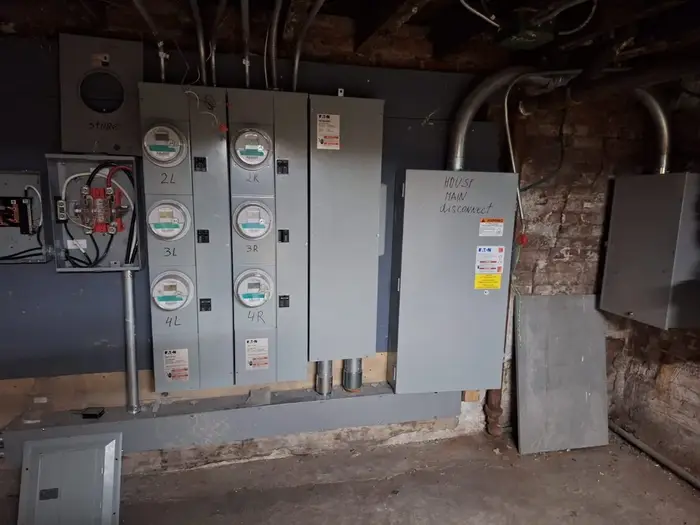
A Level 2 charger typically draws 40–60 amps. If you have a modern 200-amp panel with open breaker slots, adding the circuit is straightforward. But many NYC homes — especially pre-war brownstones and older apartments — still run on 100-amp or even 60-amp service that’s already near capacity. In that case you’ll need an electrical panel upgrade before the charger can be installed safely (see how panel upgrades work, and 100-amp vs 200-amp service). That’s the most common reason an EV install jumps from $2,000 to $5,000+.
2. Distance From Panel to Parking Spot
The farther the charger is from your panel, the more wire, conduit, and labor the job requires. A charger mounted in an attached garage right next to the panel is cheap to wire. A charger on the far side of the house, in a detached garage, or out at a curbside/driveway spot means a longer conduit run — sometimes through masonry or underground — which adds to the cost.
3. NYC DOB Permit
EV charger installation in New York City requires a Department of Buildings (DOB) electrical permit and a licensed electrician. The permit typically costs $300–$600 and the work must pass a DOB inspection. Any installer who offers to skip the permit is cutting a corner that can void your homeowner’s insurance and create problems when you sell. A licensed electrician files the permit as part of the job. For what DOB requires in general, see our NYC electrical permit guide.
4. Charger Brand and Features
Hardware ranges from about $400 for a solid basic unit to $800+ for a smart charger with Wi-Fi, scheduling, and app monitoring. Tesla, ChargePoint, Wallbox, and Enel X are all common choices in NYC. If your car came with a mobile connector, you may only need the electrician to install a 240-volt NEMA 14-50 outlet to plug it into — which can save on hardware cost.
5. Tesla Wall Connector and Other Brands
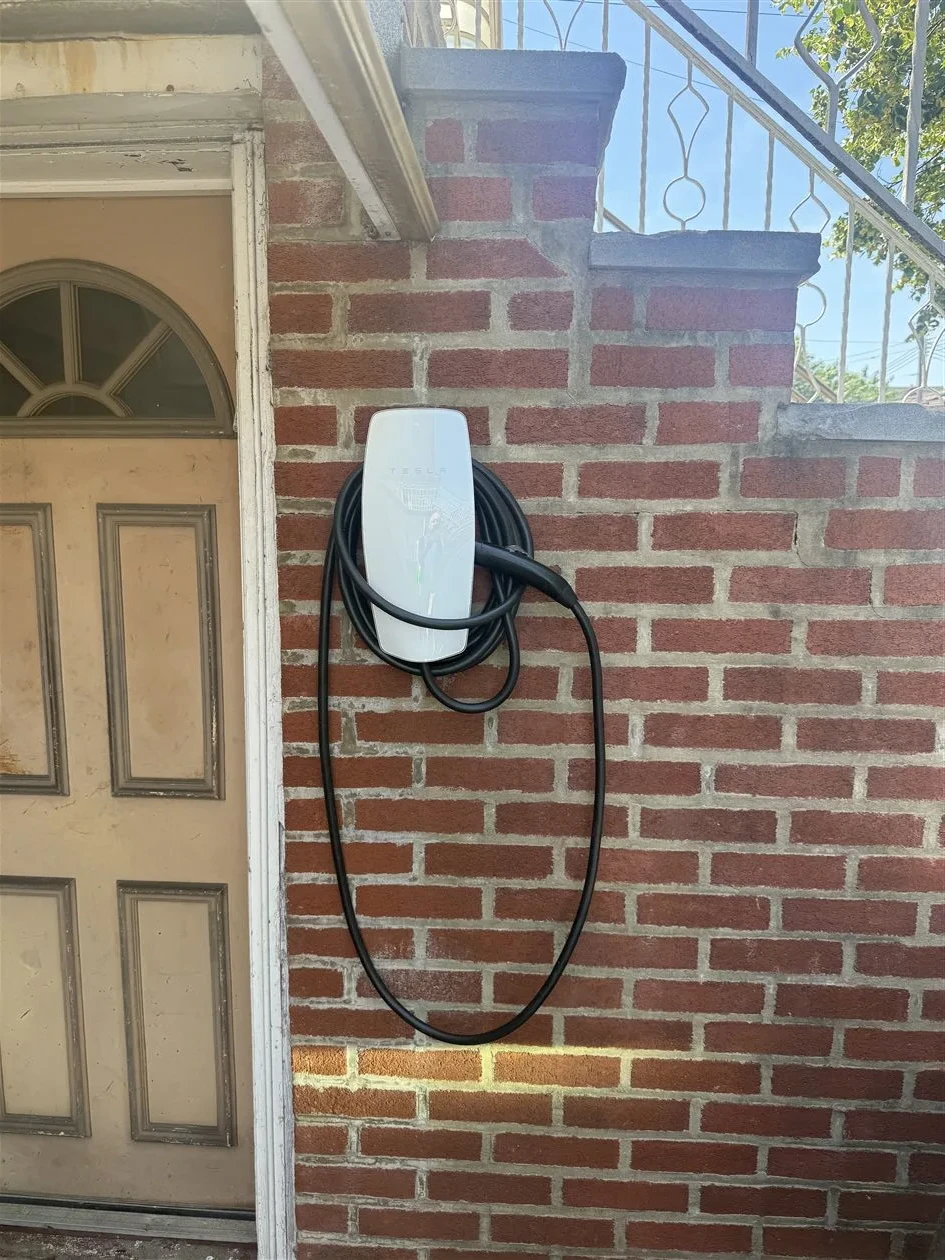
Searching for Tesla charger installation cost? The electrician’s side of a Tesla Wall Connector job is the same as for any Level 2 charger: a dedicated 240-volt circuit, the permit, and the labor, so the cost drivers above apply. The charger hardware is priced separately.
DC fast chargers, sometimes called Level 3, are commercial-scale equipment with much higher power and service requirements, so they are not priced like a home install. For commercial properties, see our commercial electrician page.
NYC EV Charger Incentives: What Is Still Available in 2026
- Federal home charger tax credit (30C): ended. The credit of 30% of the cost, up to $1,000, applied only to chargers placed in service through June 30, 2026, according to the IRS. A charger installed now does not qualify. If yours was operating by that date, ask a tax professional about Form 8911.
- Con Edison SmartCharge New York: pays rewards for charging off-peak and for avoiding summer peak hours. Enrolling your whole home in the time-of-use rate, or adding an EV-only meter, makes you ineligible. See Con Edison’s SmartCharge page for current terms.
- Con Edison rate options: the standard residential rate is not priced by time of day. The time-of-use rate prices off-peak hours (midnight to 8 a.m.) well below peak, which can lower the cost of overnight charging. An EV-only meter is a separate option that needs an electrician, a new meter pan and panel, and an extra monthly charge, so it adds to installation cost. Rates and details are on Con Edison’s EV rate options page.
- Con Edison PowerReady: helps cover the infrastructure that brings power to Level 2 and fast charging stations at a property; chargers themselves are not eligible. When we checked in October 2026, Con Edison said it was not accepting new Level 2 project applications. See the PowerReady page for the current status.
Programs and credit amounts change, so verify the current details before counting on a specific number.
How Long Does an EV Charger Installation Take?
A straightforward Level 2 install — where your panel has capacity and the charger is close to it — usually takes a half day to a full day of work. If a panel upgrade or a long conduit run is involved, plan for the broader 1–2 week NYC timeline once permit filing and any Con Edison coordination are factored in. Your electrician will give you a realistic schedule after assessing your panel.
Is a Home EV Charger Worth It?
For most EV owners with off-street parking, absolutely. Charging at home overnight on a Level 2 setup is cheaper and far more convenient than relying on public chargers — especially in NYC, where public charging is competitive and not always nearby. A properly installed charger also adds resale appeal as more buyers go electric. The upfront cost pays for itself in convenience and lower charging costs over the life of the vehicle.
Get an EV Charger Installation Estimate in NYC
AE Electric is a licensed electrical contractor serving Brooklyn, Manhattan, and the surrounding boroughs. We handle the full EV charger installation process — load calculation, permit filing, the dedicated 240-volt circuit, and DOB inspection — and we’ll tell you upfront whether your panel can handle the charger or needs an upgrade first.
Learn more about our EV charger installation service or contact us for a free estimate. We’ll assess your panel, your parking setup, and your charging needs — and give you a straight, all-in price.
We install EV chargers in Brooklyn (including Williamsburg), Manhattan, Queens, the Bronx, and Staten Island.
Related reading: Not sure your panel can carry a charger? Read signs you need a panel upgrade. For other job prices, see the NYC electrician price guide.
Frequently Asked Questions
Do I need a permit to install an EV charger in NYC?
Yes. EV charger installation in New York City requires a DOB electrical permit and must be done by a licensed electrician. The work has to pass a DOB inspection. Avoid any installer who suggests skipping the permit; it creates insurance and resale problems.
Can I install an EV charger if I have a 100-amp panel?
Sometimes, but often not without a load calculation. A Level 2 charger draws a lot of power, and many 100-amp panels are already near capacity. A licensed electrician will run a load calculation to determine whether your panel can support a charger or needs an upgrade to 200 amps first.
Can I install an EV charger in an apartment building or co-op?
It is possible but more involved. You will typically need board or building owner approval, a parking spot with access to electrical service, and possibly a dedicated meter. Con Edison’s PowerReady program helps with charging infrastructure at some properties, but it was not accepting new Level 2 applications when we last checked, so confirm with Con Edison. Reach out and we can walk you through what your building allows.
How much does it cost to charge an EV at home in NYC?
It depends on your rate and your car’s efficiency. Con Edison’s time-of-use rate prices off-peak hours (midnight to 8 a.m.) well below peak, so overnight charging is typically cheapest. Enrolling the whole home in that rate means giving up SmartCharge New York rewards, so compare the two before choosing.
Is there still a federal tax credit for a home EV charger?
No. The 30C credit, 30% of the cost up to $1,000, applied only to chargers placed in service through June 30, 2026, according to the IRS. If yours was operating by that date, ask a tax professional about Form 8911.
Does Con Edison offer incentives for home EV charging?
Con Edison’s SmartCharge New York program pays rewards for charging off-peak and avoiding summer peak hours. Enrolling the whole home in the time-of-use rate or adding an EV-only meter makes you ineligible. Check Con Edison’s site for current terms.
How much does it cost to install a Tesla charger at home?
The electrician’s cost is the same as for any Level 2 charger: a dedicated 240-volt circuit, the permit, and labor, which depend on panel capacity and the distance to the parking spot. The charger hardware is priced separately.
What is the cheapest way to install an EV charger?
A short wire run, a panel with spare capacity, and, if your car’s mobile connector supports it, a 240-volt NEMA 14-50 outlet instead of a hardwired charger. A permit and a licensed electrician are still required.