
You want a real 200-amp panel, a dedicated circuit for the AC, or an EV charger in the garage. In a house, that is a conversation between you, your electrician, and the Department of Buildings. In a New York City co-op or condo, there is a third party in the room before any of that happens: your board.
Most of the delays and blown budgets we see on apartment jobs are not electrical problems. They are approval problems — work scheduled before the alteration agreement was signed, an insurance certificate naming the wrong entity, or a shareholder who found out in week three that the building’s riser cannot deliver the amperage they were promised. Here is how the approval layer actually works, what triggers it, and how to get through it once instead of twice.
Who owns what, and why it decides everything
The single question that governs every apartment electrical job is where the building’s property ends and yours begins.
- In a co-op, you do not own real estate. You own shares in a corporation, and a proprietary lease that lets you occupy a unit. The corporation owns the building, including the walls your wiring runs through. That is why co-op boards can set conditions on work inside your apartment that a landlord-tenant relationship would never support — legally, you are closer to a tenant with equity than to a homeowner.
- In a condo, you hold a deed to the unit itself, and your authority inside it is genuinely broader. But the service, the meter room, the risers, and the house panels are common elements owned in common by all the owners. And nearly every set of by-laws requires notice, plans, and approval before an alteration — some also give the board a right to inspect or to require restoration.
The practical takeaway is the same in both: electricity reaches your apartment through infrastructure you do not control, and the moment your project touches that infrastructure, it becomes the building’s decision rather than yours.
What almost always needs board approval
Buildings differ, and your alteration agreement is the controlling document. But across the co-ops and condos we work in around the five boroughs, this list is close to universal:
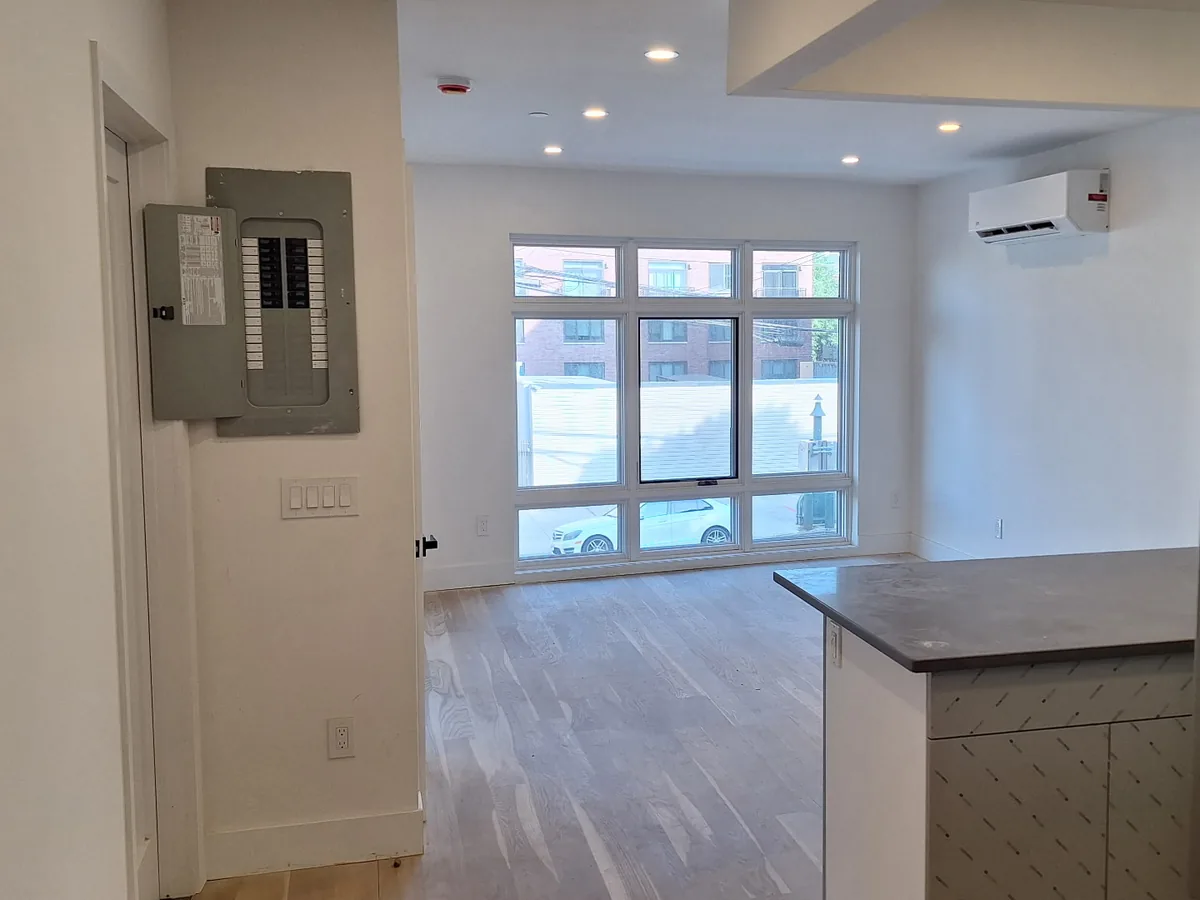
- Replacing or upgrading the unit panel — including a fuse box swap, and including a like-for-like replacement at the same amperage.
- Any increase in your unit’s service amperage, because it draws on shared riser capacity.
- New circuits — a dedicated line for an AC unit, a range, a dryer, a home office, or a car charger.
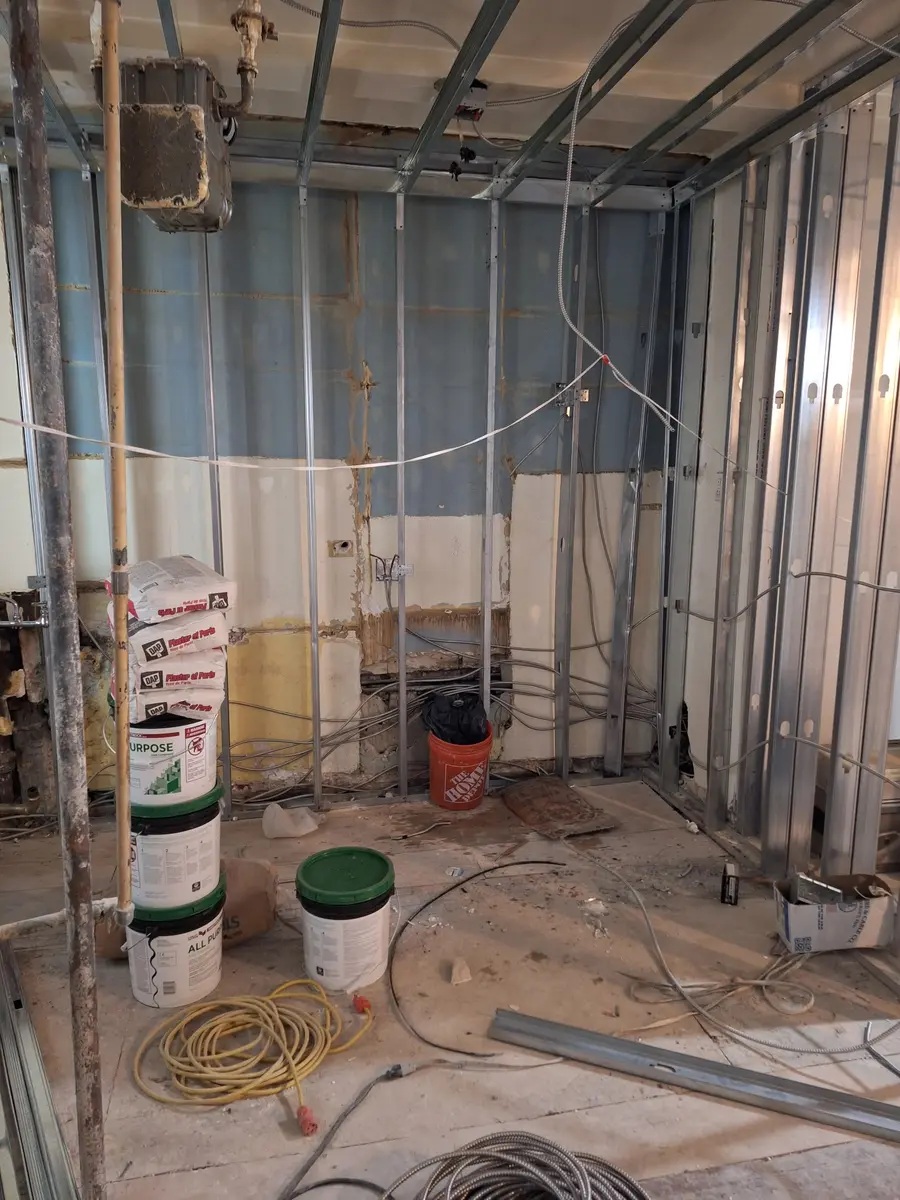
- Any work that opens a wall, ceiling, or floor, which includes most outlet relocations and nearly all recessed lighting.
- Anything in a hallway, lobby, roof, basement, or garage, even if it exclusively serves your unit.
- EV charger installations. These involve a new dedicated circuit, usually a run through common areas, and often a metering question. Our EV charger installation service page covers the technical side; the board side is its own process.
What usually does not
Work that stays on an existing circuit, inside an existing box, and behind an unopened wall is generally yours to do — with a licensed electrician, and within the building’s house rules on work hours and elevator use:
- Swapping a light fixture for another fixture on the same box and circuit.
- Replacing a worn receptacle or switch with a like device.
- Replacing a bathroom or kitchen receptacle with a GFCI where one is already required.
- Adding or replacing battery-operated smoke and carbon monoxide alarms.
Two warnings on this list. First, “small” is not the test — a single new outlet on a new circuit needs approval, while a chandelier swap on an existing box usually does not. Second, when you are unsure, ask the managing agent in writing and keep the answer. A short email costs you a day; a stop-work order from the super costs you a trade schedule.
The alteration agreement: what the building will ask you for
The alteration agreement is the contract between you and the corporation or association that governs the work. Expect most of the following:
- A licensed electrical contractor. Buildings verify this, and the DOB will not issue a permit to anyone else. Anything in a NYC apartment should be done by a licensed residential electrician regardless of the building’s rules.
- A certificate of insurance naming the corporation or association, the managing agent, and often the sponsor and the board as additional insureds — with exact wording and minimum limits. This is the most common cause of a rejected submission. Get the required wording from the managing agent before your electrician issues the COI.
- A scope of work and drawings. For anything beyond simple device work, a panel schedule and a load calculation. Larger jobs need plans stamped by an architect or professional engineer.
- Proof of a filed DOB permit, where one is required.
- Fees and a deposit. Buildings commonly charge a processing or review fee and hold a refundable security deposit against damage to common areas. These vary enormously by building — roughly a few hundred dollars for the fee and one to several thousand for the deposit is typical in the city, but read your own agreement rather than a range on a web page.
- Architect or engineer review paid by you, often several hundred to a couple of thousand dollars, plus a schedule of permitted work hours and rules about elevator padding, debris removal, and where your electrician may park.
Board approval is not a DOB permit
These are two separate approvals from two unrelated authorities, and passing one does nothing for the other. Your board can approve a job that still needs a permit, and the DOB will happily issue a permit for work your board has not authorized.
In broad terms, panel replacements, service changes, and new circuits or outlets require a DOB electrical permit filed by a licensed electrical contractor, while like-for-like fixture and device swaps do not. Our guide to when you need a permit for electrical work in NYC walks through the line in detail. The order that works: get the board’s written approval, file the permit, then schedule the work.
The amperage question your board cannot ignore
This is where apartment projects most often stall. A shareholder asks for 100 or 150 amps in a unit currently served at 60, and the answer depends on something outside the apartment entirely: what the riser and the house service can actually deliver, and what the other units are already drawing on it.
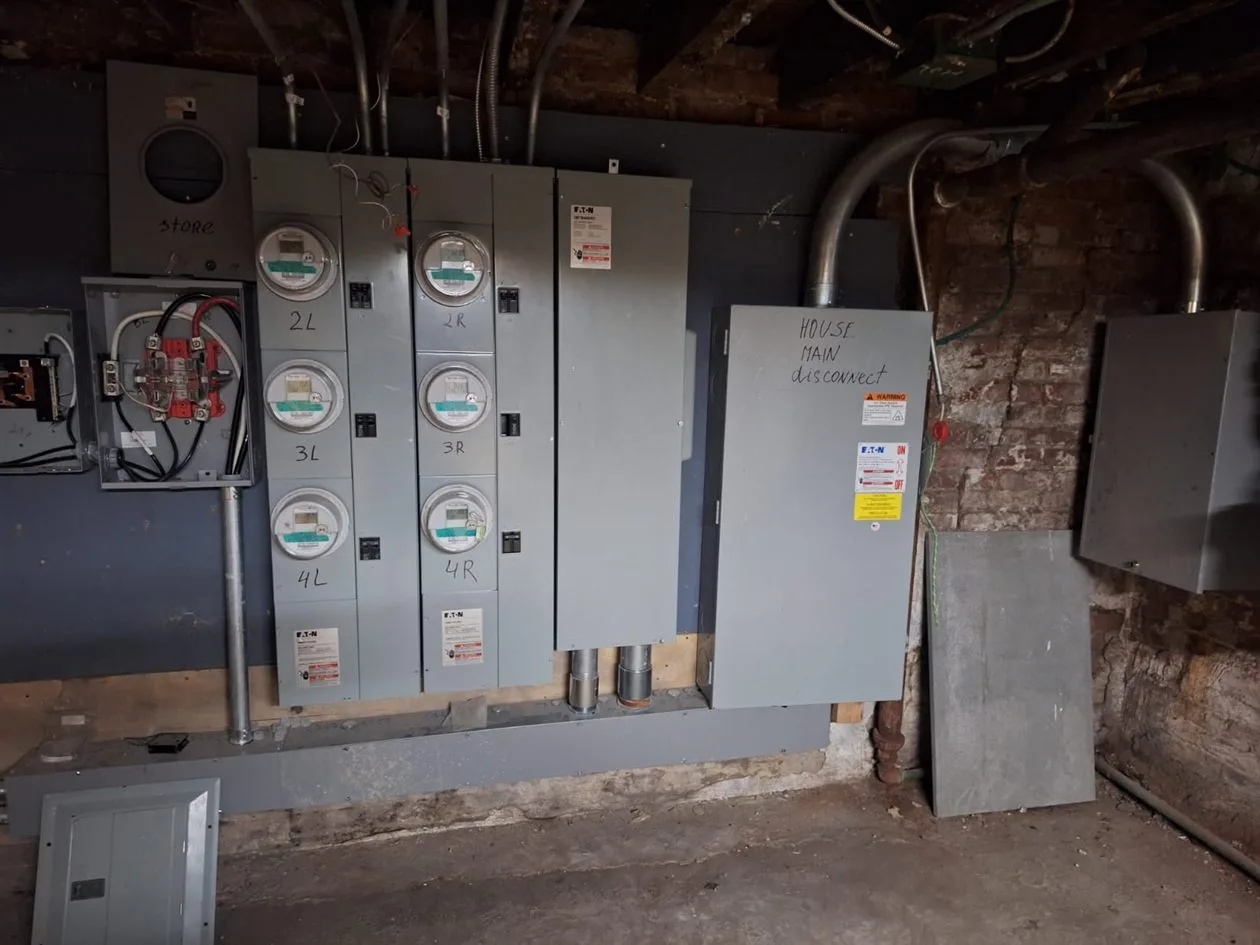
In a pre-war building where the risers were sized for lighting and a radio, there may be no spare capacity at all without a building-wide service upgrade — a project on a completely different scale, and one the board and Con Edison decide together. In a post-war or recently renovated building, the capacity often exists and the answer is a straightforward yes. Either way, an electrician has to survey the house panel and the riser before anyone can promise you an amperage. Our comparison of 100-amp vs 200-amp service in NYC explains what different service sizes actually support.
How long it takes, and what it adds to the cost
Plan for the approval layer as a real phase of the project, not paperwork you handle the week before.
- Board review: commonly two to eight weeks, driven mostly by how often the board meets. Many boards meet monthly and skip August. Submitting a week after a meeting can cost you a month.
- Architect or engineer review: one to three weeks, often running in parallel.
- DOB permit filing: days to a few weeks depending on the job and whether plans are required.
- The electrical work itself: usually the shortest phase. A unit panel replacement is typically a one- to two-day job once everything is in place.
On cost, the electrical scope is only part of the number. A panel upgrade in NYC commonly runs $2,500–$5,500 as an estimate before building fees, permits, and any required engineering — see our electrical panel upgrade cost breakdown for what drives that range. In an apartment, add the building’s fees, the deposit you get back if nothing is damaged, and the review costs on top.
What happens if you skip approval
People do it, usually because the work seemed small. The consequences are not small.
- The work gets stopped. Supers and doormen notice tools and debris. A stop from building management can leave your apartment mid-demolition for weeks.
- You can be ordered to restore it. Both proprietary leases and condo by-laws typically let the building require unauthorized work be undone at your expense.
- Unpermitted work becomes a violation. If the DOB gets involved, you are looking at an ECB electrical violation, an OATH hearing, penalties, and the cost of correcting and legalizing the work anyway.
- It surfaces at resale. Co-op boards and condo closings ask about alterations. Unapproved electrical work discovered at the worst possible moment has killed deals and forced price reductions.
- Insurance gets complicated. If unpermitted work contributes to a fire or a water event, expect the building’s carrier and your own to take a hard look at who authorized it.
Getting approved on the first submission
- Ask the managing agent for the alteration package before you design anything. It tells you the insurance wording, the fees, the work hours, and whether an engineer is required. Designing around those rules is much cheaper than redesigning after a rejection.
- Have the electrician survey the house panel and riser first, so the amperage in your submission is one the building can actually deliver.
- Get the COI wording in writing and forward it verbatim to your electrician’s insurer. This one item causes more rejections than anything else on the list.
- Submit a real scope — a panel schedule, a load calculation, and a drawing showing new circuits and devices. Boards reject vague scopes because vague scopes are what they get burned by.
- Ask when the board next meets and work backward from that date.
- Keep every approval in writing and hold the file. You will be asked for it when you sell.
Working with an electrician who has done this before
The technical work in an apartment is not unusual. The building process around it is, and an electrician who has never worked in a NYC co-op will not know to ask for the alteration package, will issue a COI naming the wrong entity, and will schedule a crew for a Saturday in a building that only permits work Monday through Friday, nine to four.
AE Electric works in co-ops and condos across Manhattan, Brooklyn, Queens, the Bronx, and Staten Island — licensed, insured, and used to producing the certificates, load calculations, and permit filings that boards and managing agents ask for. If you are planning a panel upgrade, a new circuit, or an EV charger in an apartment building, call (646) 846-0008 and we will tell you what your board is going to want to see before you submit.
Related reading: Who owns the alarms in a co-op or condo? See NYC smoke, CO, and gas detector laws. See how long electrical work takes.
Frequently Asked Questions
Do I need board approval to replace the electrical panel in my NYC co-op?
Almost certainly yes. A panel replacement is treated as an alteration in essentially every co-op and condo in the city, even when it is a like-for-like swap at the same amperage. You will need to submit under the building's alteration agreement, provide a certificate of insurance naming the corporation and managing agent, and file a DOB electrical permit through a licensed electrical contractor.
What is the difference between board approval and a DOB permit?
They come from two unrelated authorities and neither substitutes for the other. Board approval is a private contractual permission from your co-op corporation or condo association under an alteration agreement. A DOB permit is a New York City government authorization filed by a licensed electrical contractor. Panel work, service changes, and new circuits typically need both. Get the board's written approval first, then file the permit, then schedule the work.
Can my condo board stop me from doing electrical work inside my own unit?
In practice, usually yes. You hold a deed to the unit, so your authority is broader than a co-op shareholder's, but the by-laws in nearly every NYC condo require notice, plans, and approval before an alteration, and the risers, house panel, and meter room are common elements you have no right to touch. Boards can also require restoration of unauthorized work at your expense.
Can I get more amps in my apartment?
It depends on the building, not on your apartment. The answer is set by the capacity of the riser feeding your unit and the house service, and by what the other units are already drawing. In many pre-war buildings there is no spare capacity without a building-wide service upgrade. An electrician has to survey the house panel and riser before anyone can promise you an amperage.
How long does board approval for electrical work take in NYC?
Commonly two to eight weeks, driven mostly by how often the board meets. Many boards meet monthly and skip August, so submitting a week after a meeting can cost you a month. Architect or engineer review adds one to three weeks, often in parallel, and DOB permit filing adds days to a few weeks. The electrical work itself is usually the shortest phase.
What happens if I do electrical work without board approval?
Building management can stop the job mid-demolition, and both proprietary leases and condo by-laws typically allow the building to require unauthorized work be undone at your expense. If the work also went unpermitted and the DOB gets involved, you face an ECB violation, an OATH hearing, penalties, and the cost of correcting and legalizing the work anyway. It also surfaces at resale, when boards and closings ask about alterations.