
Atlantic hurricane season runs from June 1 through November 30, and the stretch from mid-August through October is when the New York City area sees the most activity. Two storms are still the reference points for most homeowners here: Sandy in 2012, which pushed seawater into coastal Brooklyn, Queens, and Staten Island and left parts of the city dark for days, and the remnants of Ida in 2021, which flooded basements across Queens and Brooklyn with rainfall alone. Both did most of their damage to electrical systems — panels, meters, wiring, and appliances. The good news is that nearly all of that damage is predictable, which means it is also preparable. Here is the electrical checklist worth working through before a storm is in the forecast.
Why storms hit NYC homes electrically first
A hurricane or tropical storm reaches your electrical system through three separate doors, and preparing for one does nothing about the other two:
- Outage — Con Edison de-energizes flooded networks and loses overhead lines to wind and trees. No power means no sump pump, no refrigeration, no heat, and in a walk-up, no elevator.
- Water — most NYC panels, meters, and service equipment live in a basement or a below-grade utility room. That is exactly where storm surge and heavy rainfall end up.
- Surge — damage often happens at the moment power comes back. Restoration, switching, and nearby lightning all send voltage spikes down the line into whatever is still plugged in.
Start with your panel and service equipment
Before you think about generators, look at what you already have. A panel that is already at capacity, corroded, or fed by an undersized service is the weakest link in every storm scenario, and it is also the piece a generator has to connect to.
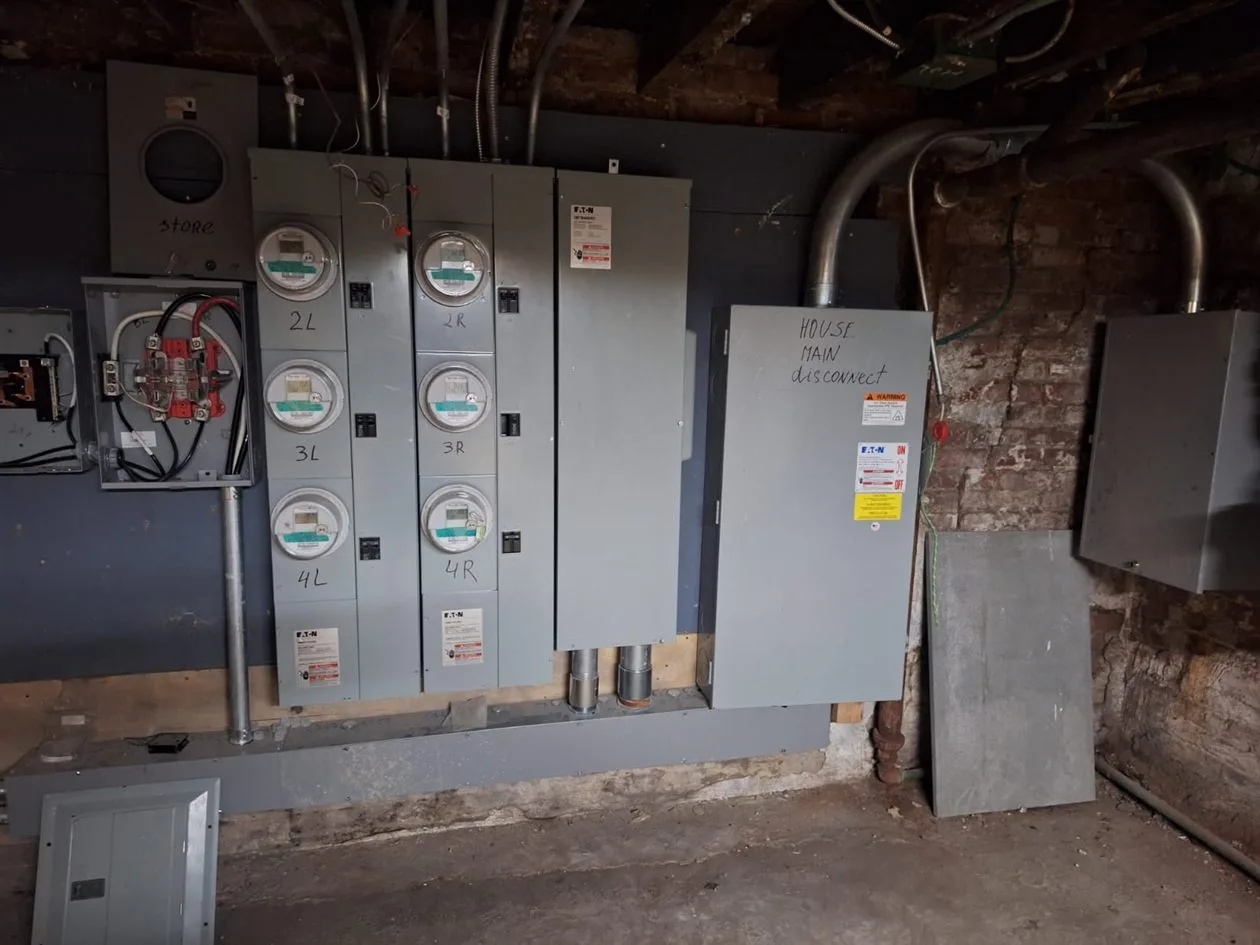
- Know where the main shutoff is and make sure you can reach it without standing in water. Everyone in the household should know it too.
- Label your circuits. During an outage you want to know which breaker feeds the sump pump and the refrigerator without guessing.
- Check the panel’s condition. Rust on the enclosure, moisture staining, a warm cover, or a panel that is already full are all reasons to have it looked at now rather than after a storm.
- Confirm your service size. Many older Brooklyn and Queens houses still run 60–100 amps. If you are adding a generator, a sump pump, and AC to that, an electrical panel upgrade is the prerequisite, not an upsell.
Decide your backup power plan before the forecast
Generators are the single biggest prep decision, and the worst time to make it is 48 hours before landfall, when supply is gone and no electrician has an opening. There are two realistic options for a NYC home.
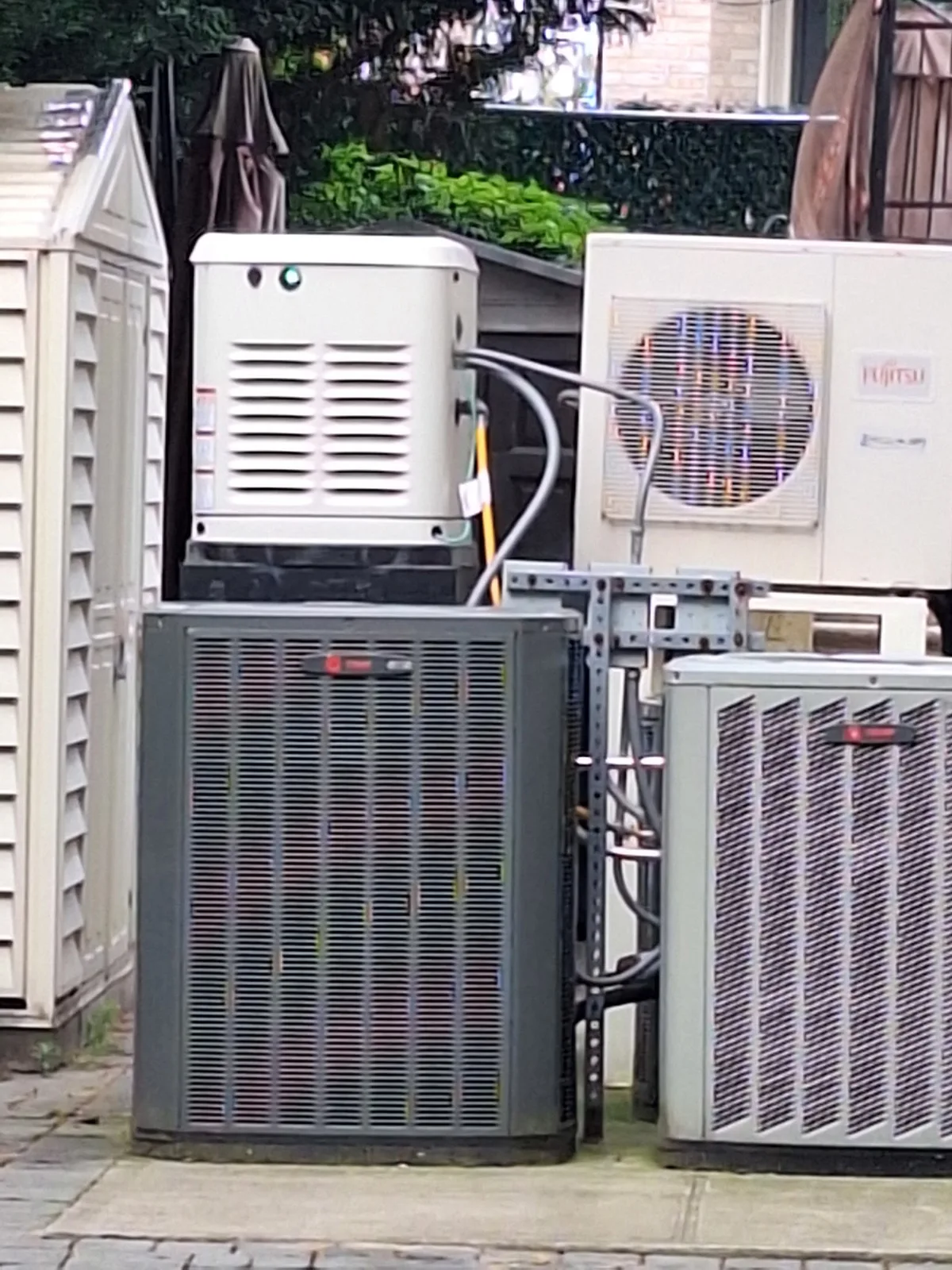
Permanently installed standby generators
A standby unit sits outside on a pad, runs on natural gas or propane, and starts automatically through an automatic transfer switch when utility power drops. It is the right answer for a house with a sump pump, a medical device, a home office, or a finished basement you cannot afford to lose. It is permitted work: the electrical side is filed with the DOB, the gas connection involves a licensed plumber, and placement has to respect clearances from windows, doors, and lot lines. See our generator installation service for how the process runs, and the backup generator cost guide for realistic budget ranges.
Portable generators, and the rule that keeps people alive
A portable generator is cheaper and covers the basics: a fridge, a few lights, phone charging. Two hard rules apply, and carbon monoxide deaths after storms happen every single year because they get broken.
- Never run a generator indoors — not in a garage, not in a basement, not in a shed, not by an open window. Outdoors only, well away from doors, windows, and vents. Working CO alarms are not optional.
- Never backfeed your house by plugging a generator into a wall outlet. It energizes the utility line outside your home and can kill a Con Edison lineworker, and it bypasses every protective device in your panel. If you want a portable to power circuits rather than extension cords, an electrician installs a manual transfer switch or an interlock kit.
Whichever route you choose, exercise it before the season: run a standby unit’s self-test, and start a portable to confirm you have fresh fuel, oil, and cords rated for the load.
Protect against the surge, not just the outage
Most storm-related appliance damage in NYC is not from the power going out. It is from the voltage spike when it returns, or from switching on the Con Edison network during the event. A power strip under a desk protects one device; it does nothing for the HVAC system, the boiler control board, the refrigerator, or the EV charger.
Layered protection is the standard approach: a whole-house surge protector installed at the panel to clip the large events, plus point-of-use protectors on sensitive electronics. If a storm is imminent and you do not have whole-house protection yet, unplug what you can — computers, TVs, and anything with a control board.
If you are in a flood zone, plan for water reaching the equipment
Large parts of coastal Brooklyn, the Rockaways, southern Queens, Staten Island’s East Shore, and Lower Manhattan sit in mapped flood zones, and Ida proved that inland basements flood from rainfall alone. If water can reach your service equipment, prep looks different:
- Elevate what you can. Relocating a panel, meter, or subpanel above the design flood elevation is a real project, but it is the difference between a wet basement and a destroyed electrical system. It is also frequently required when a flood-damaged home is rebuilt.
- Get the sump pump right. It should be on its own dedicated circuit, not sharing with a freezer or a workshop outlet, and it needs a plan for when the power is out: a battery backup, a water-powered backup, or generator coverage.
- Raise basement outlets and hardwired equipment where feasible, and keep furnaces, boilers, and washers off the slab if the space floods regularly.
- Test outdoor and basement GFCI outlets before the season. Damp locations are exactly where ground-fault protection earns its keep.
During and after the storm
- Never enter a flooded basement if water is near the panel, outlets, or any energized equipment. Water plus electricity is the one storm hazard with no safe workaround. Call Con Edison to cut service, or an electrician if the shutoff is safely accessible.
- Call Con Edison for anything outside the house — downed wires, a damaged service drop, a pulled-off meter, or a neighborhood-wide outage. Call a licensed electrician for anything on your side of the meter.
- Assume submerged electrical equipment is finished. Panels, breakers, outlets, switches, and motors that have been underwater are not dried out and reused. Floodwater leaves silt and corrosion inside, and the industry standard is replacement. Insurance adjusters expect this too.
- Get an inspection before re-energizing a flooded home. An electrical safety inspection establishes what is salvageable and what has to be replaced, and it documents the damage.
- Watch for delayed symptoms. Breakers that trip repeatedly, warm outlets, flickering, or a burning smell in the weeks after a storm all mean stop and call someone.
The short version: a pre-season checklist
- Locate and clear access to your main shutoff, and make sure everyone at home knows it.
- Label your panel circuits, especially the sump pump and refrigerator.
- Have an aging, full, corroded, or undersized panel assessed now, not in October.
- Decide on backup power: a standby generator with a transfer switch, or a portable plus a proper interlock. Book it early.
- Test the generator and confirm fuel, oil, and CO alarms.
- Install whole-house surge protection, and add point-of-use protectors on electronics.
- Put the sump pump on a dedicated circuit with a backup power plan.
- Test GFCI outlets in the basement, outdoors, and in damp areas.
- If you are in a flood zone, price out elevating panels and service equipment.
- Save a licensed electrician’s number where you can find it without a phone charge.
Prepping before the season, or dealing with storm damage now? AE Electric installs standby generators, whole-house surge protection, and flood-resilient service equipment across all five boroughs, permitted and inspected, and we handle emergency electrical calls when a storm has already hit. Call (646) 846-0008.
Frequently Asked Questions
When is hurricane season in New York City?
Atlantic hurricane season runs June 1 to November 30, with the highest risk for the NYC area from mid-August through October. Electrical prep is best done before the season starts, since generator supply and electrician availability both tighten once a storm is in the forecast.
Do I need a permit to install a generator in NYC?
Yes. A permanently installed standby generator is permitted work: the electrical portion is filed with the DOB and performed by a licensed electrician, the gas connection is done by a licensed plumber, and placement must meet clearance requirements from windows, doors, and property lines.
Can I plug a generator into a wall outlet to power my house?
No. Backfeeding through an outlet energizes the utility line outside your home and can electrocute a Con Edison lineworker, and it bypasses your panel protection. The safe method is a transfer switch or interlock kit installed by a licensed electrician.
Is electrical equipment safe to use after it has been flooded?
No. Panels, breakers, outlets, switches, and motors that have been submerged should be replaced rather than dried out and reused. Floodwater leaves silt and corrosion inside that causes failures and fires later. Have a licensed electrician inspect the system before the home is re-energized.
Does a power strip protect my appliances during a storm?
Only partially. A point-of-use strip protects the devices plugged into it, not hardwired equipment like your HVAC system, boiler controls, or EV charger. A whole-house surge protector at the panel handles the large events, and strips are the second layer.
Who do I call during a storm outage, Con Edison or an electrician?
Con Edison for anything outside the house: downed wires, a damaged service drop, a pulled meter, or a neighborhood outage. A licensed electrician for anything on your side of the meter, including a flooded panel, damaged wiring, or generator and transfer switch problems.