
If your NYC home still has its original electrical panel from a mid-century renovation, it’s worth checking the brand on the door. Federal Pacific Electric (FPE) “Stab-Lok” panels were installed in millions of American homes from the 1950s through the early 1980s — and they have a well-documented safety problem: the breakers can fail to trip during an overload or short circuit. A breaker that doesn’t trip is a breaker that can’t protect your wiring from overheating. If you own a pre-war apartment, a brownstone, or an older house in the five boroughs, here’s how to tell whether you have a Federal Pacific panel and what a licensed electrician does about it.
What is a Federal Pacific “Stab-Lok” panel?
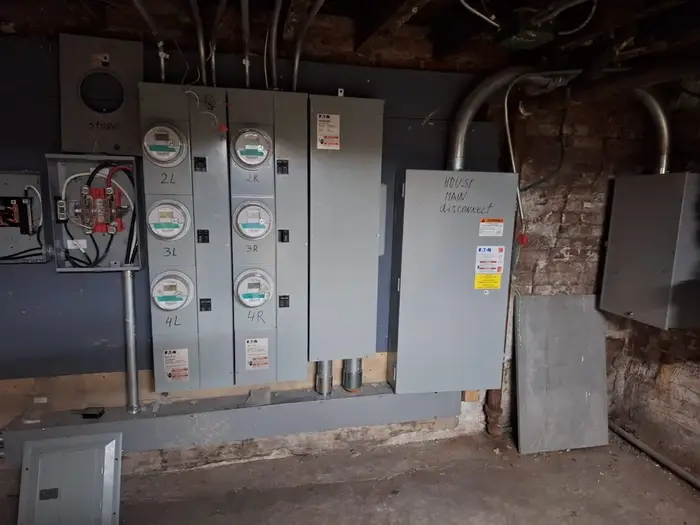
Federal Pacific Electric was one of the most common electrical panel manufacturers in the U.S. for decades. Its signature product line was branded Stab-Lok, and you’ll often see that name on the breakers or the panel label. The panels look ordinary — a gray metal box full of breakers — which is exactly why so many homeowners never realize they have one. The problem isn’t how the panel looks; it’s how the breakers behave under the one condition they exist to handle: a fault.
Why Federal Pacific panels are considered a fire hazard
A circuit breaker has one critical job: when the current on a circuit climbs too high — from an overload or a short — it must trip and cut the power before the wire overheats. Independent testing over the years has found that a meaningful share of FPE Stab-Lok breakers fail to trip when they should, and some can be difficult to reset or turn off reliably. A breaker that stays on during a fault lets heat build in the wiring behind your walls — the exact scenario that starts electrical fires.
A federal safety investigation into these panels in the 1980s was closed without a formal recall — largely for procedural and funding reasons, not because the panels were cleared. In the decades since, many licensed electricians, home inspectors, and insurers have treated FPE Stab-Lok panels as a latent hazard and recommend replacement rather than repair. That’s the key point for homeowners: this isn’t a panel you fix breaker by breaker — the accepted remedy is to replace the panel.
How to tell if you have one in your NYC home
- Read the label. Open the panel door (don’t touch anything inside) and look for Federal Pacific Electric, FPE, or Stab-Lok on the panel or the breakers.
- Look at the breakers. Stab-Lok breakers often have a distinctive look — many have a small red or orange stripe or marker on the toggle.
- Consider the building’s age. FPE panels are most common in NYC homes and apartments wired or renovated between the 1950s and early 1980s — including pre-war buildings that were updated mid-century.
- Watch for warning signs. Breakers that don’t trip when they clearly should, feel warm, buzz, or won’t reset firmly are red flags on any panel — and more concerning on an FPE. See our guide to what a tripping breaker is telling you.
If you’re not sure what you’re looking at, don’t guess — have it identified during an electrical safety inspection. An FPE panel frequently gets flagged during a home inspection when you buy or sell, so it’s better to know before it surfaces in a deal.
What NYC homeowners should do about it
If you confirm you have a Federal Pacific Stab-Lok panel, the safe and widely-recommended course is to replace it rather than keep relying on it. You don’t need to panic or shut off your power tonight — but you should put a panel replacement on your near-term list and have a licensed electrician assess it, especially if you’re planning a renovation, adding load (central AC, an EV charger, a new kitchen), or selling. Swapping individual breakers or adding new ones to an FPE panel is not a fix — the concern is the panel and breaker design itself.
Replacing a Federal Pacific panel in NYC
Replacing an FPE panel in NYC is a permitted job done by a licensed electrician, and it’s a natural moment to right-size your service for how you actually live:
- Assessment — the electrician confirms the panel, checks your service size and wiring, and plans the replacement.
- Right-sizing the service — many older homes still run on 60–100 amps; a replacement is the time to consider a 100-amp vs 200-amp service upgrade for modern loads.
- Permit & Con Edison coordination — panel and service work is filed with the DOB and coordinated with Con Edison, so the job is legal and inspected.
- Swap and sign-off — the old FPE panel comes out, a modern code-compliant panel with proper breakers goes in, and the work is inspected.
This is our core electrical panel upgrade service. For budgeting, see what a panel upgrade costs in NYC — replacing an outdated panel typically falls in the same range as a standard upgrade, depending on service size, access, and whether the building riser needs coordination.
Think you have a Federal Pacific panel? AE Electric identifies and replaces outdated and unsafe panels across all five boroughs, permitted and inspected. Call (646) 846-0008 for a licensed assessment.
Frequently Asked Questions
Are Federal Pacific panels really dangerous?
Independent testing has found that a meaningful share of FPE Stab-Lok breakers can fail to trip during an overload or short circuit, which is the condition that prevents electrical fires. Many electricians, inspectors, and insurers treat these panels as a latent hazard and recommend replacement rather than repair.
Were Federal Pacific panels ever recalled?
A federal safety investigation in the 1980s was closed without a formal recall, largely for procedural and funding reasons rather than a finding that the panels were safe. In the decades since, the industry consensus has been to replace them.
How do I know if I have a Federal Pacific panel?
Open the panel door and look for the names Federal Pacific Electric, FPE, or Stab-Lok on the panel or breakers. Stab-Lok breakers often have a small red or orange marker on the toggle. They are most common in NYC homes wired or renovated between the 1950s and early 1980s. When in doubt, have it identified during an electrical safety inspection.
Can I just replace the breakers instead of the whole panel?
No. The concern is with the panel and breaker design itself, so swapping individual breakers or adding new ones does not fix it. The accepted remedy is to replace the entire panel with a modern, code-compliant one.
Do I need a permit to replace a Federal Pacific panel in NYC?
Yes. Panel and service work is filed with the DOB, performed by a licensed electrician, coordinated with Con Edison where needed, and inspected. It is also a good time to consider upgrading your service size for modern electrical loads.