Electrical Work for NYC Businesses, Scheduled Around Your Hours
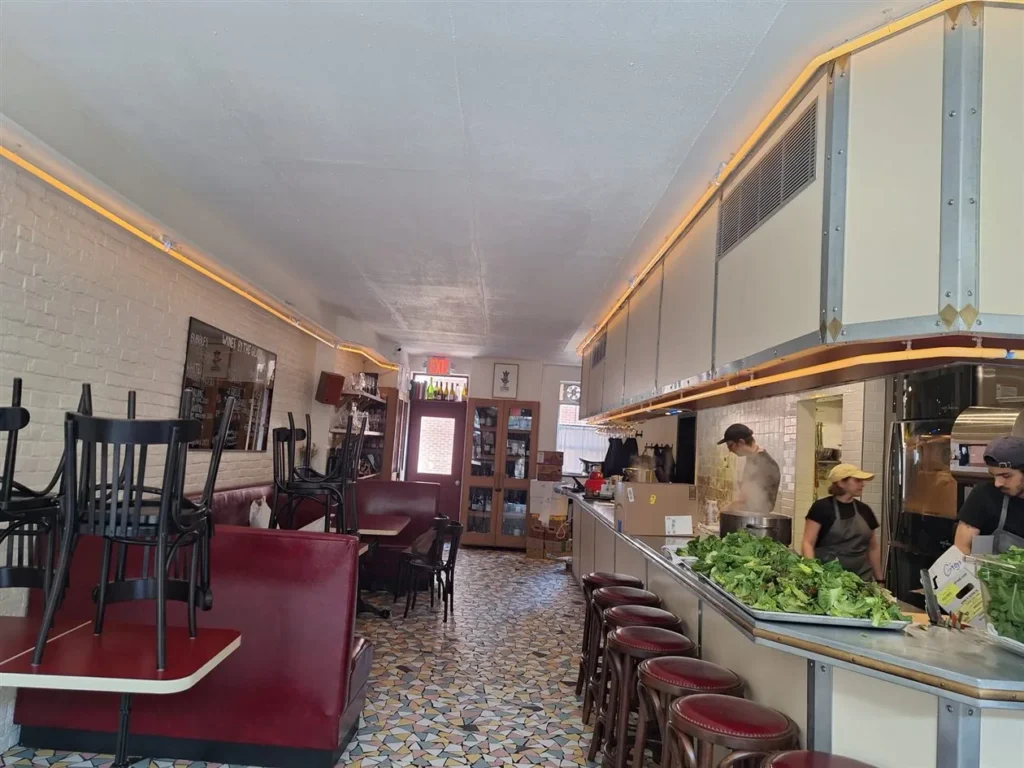
A commercial electrical job in New York City is judged by two things: whether it passes inspection, and whether your business kept running while it happened. AE Electric is a commercial electrician in NYC for restaurants, retail stores, offices, medical and dental suites, gyms, and the owners and managers of mixed-use buildings, across all five boroughs. We handle the design questions, the DOB filing, the landlord’s rules, the coordination with Con Edison, and the inspection, and we schedule the noisy parts for nights and weekends when that is what keeps your doors open.
This page covers what commercial work involves here and why it differs from residential work: the power your building actually gets, how permits and inspections run, the city laws that reach into your electrical room, what the common jobs cost, and how to plan a build-out so the electrical side does not become the thing that delays your opening.
Urgent problem right now? Call (646) 846-0008. For a dead circuit, a tripped main, or burning smell in a business, see our emergency electrician service.
Commercial Electrical Services We Provide
- Tenant build-outs and fit-outs — full electrical for a new store, restaurant, office, or medical suite, from the panel to the last fixture.
- Service and panel work — new panels and subpanels, three-phase service, and service increases coordinated with Con Edison.
- Equipment circuits — dedicated circuits for kitchen equipment, walk-ins, compressors, rooftop units, POS systems, servers, and medical or dental equipment.
- Lighting — LED retrofits, lighting controls, storefront and signage lighting, and commercial lighting installation.
- Emergency lighting and exit signs — installation, battery replacement, and repair of the life-safety lighting inspectors check.
- Code compliance — correcting cited conditions and clearing DOB and ECB electrical violations.
- EV charging — chargers for garages and parking facilities; see EV charger installation.
- Troubleshooting and repair — nuisance tripping, overheating equipment, flickering lighting, and failed circuits.
Three-Phase Power and What Your Building Actually Gets
Most homes run on single-phase power. Most commercial spaces in New York run on three-phase service, and the specific voltage matters more than owners expect. Buildings fed from Con Edison’s network commonly receive 120/208-volt three-phase; larger buildings often take 277/480-volt service, with lighting at 277 volts and transformers stepping down for receptacles.
Two practical consequences follow. First, equipment has to match the building. A kitchen range, oven, or dryer rated for 240 volts will run on 208, but below its rated output; for a restaurant ordering equipment, specifying the 208-volt version up front avoids a slow oven or a return shipment. Second, the service size sets a hard ceiling on the build-out. If your menu, your equipment list, or your number of workstations needs more than the space was built for, the answer is a service increase through the landlord and Con Edison, which is the longest-lead item on most commercial jobs. We check both before you sign a lease or order equipment, not after.
Permits, Filings, and Inspections for Commercial Work
Most commercial electrical work in the city needs a permit. The Department of Buildings issues electrical permits only to electricians it licenses, and the filing is made in DOB NOW: Build. After the work, a DOB electrical inspection has to be passed before the job is signed off. Since December 21, 2025, new filings are reviewed under the 2025 NYC Electrical Code, which adopts the 2020 National Electrical Code with the city’s own amendments.
A few of those NYC amendments show up constantly in commercial spaces:
- Voltage drop. NYC caps the combined voltage drop from the service point to the farthest outlet at 5 percent. On a long commercial floor, that can mean a larger wire size than the circuit rating alone suggests.
- Fire alarm power. A fire alarm system’s power source needs its own branch circuit, with a disconnect marked in red and labeled “FIRE ALARM CIRCUIT,” and it may not be fed through a GFCI or AFCI device.
- Plan review and larger systems. Bigger jobs may need drawings from a design professional as part of the filing. We tell you at the first walkthrough whether yours does, so it is in the schedule from day one.
Our NYC electrical permit guide explains the process step by step, and how long electrical work takes in NYC covers why the calendar is usually set by filings, approvals, and Con Edison rather than by the work itself.
City Laws That Reach Your Electrical Room
Commercial tenants and building owners in New York answer to more than the electrical code. Two local laws in particular now drive electrical work:
- Local Law 88 (lighting and submetering). In buildings over 25,000 gross square feet, lighting had to be brought up to the energy code by January 1, 2025, and tenant spaces larger than 5,000 square feet must be separately submetered. If you are taking a space in a covered building, expect the landlord to require compliant lighting and a submeter as part of the fit-out.
- Local Law 97 (building emissions). Most buildings over 25,000 square feet have had emissions limits since 2024, with stricter limits from 2030. Owners meeting them often electrify — heat pumps in place of boilers, induction in place of gas — and every one of those projects starts with whether the building’s electrical service can carry the new load.
Working in a Commercial Building: Landlords, Rules, and Con Edison
In a leased space, the electrician answers to the landlord as well as to you. Most commercial buildings have building rules or a work letter that set when noisy work may happen, require certificates of insurance naming the owner and managing agent, route shutdowns through the building engineer, and control access to the electrical closet and the freight elevator. We produce the insurance certificates and the scope, and we coordinate shutdowns with the engineer so other tenants are not surprised.
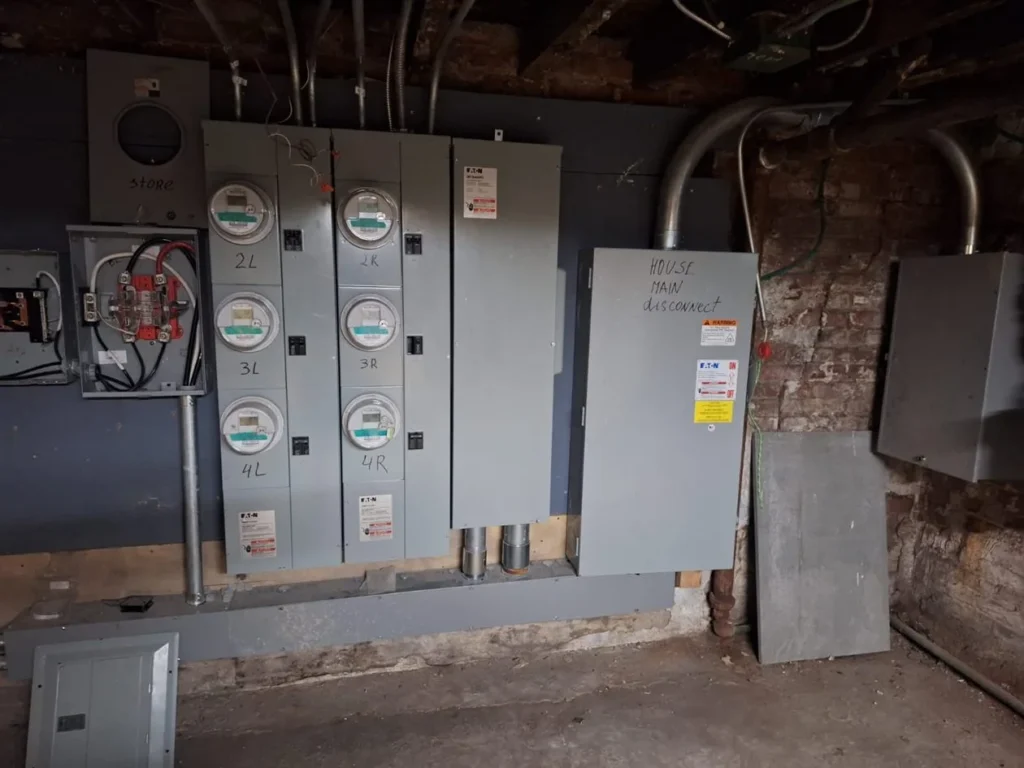
When a space needs more power, or a new meter, the request goes to Con Edison, and their review and field work often set the schedule for the whole project. Getting that request in early, with an accurate load calculation, is the single most effective thing you can do for your opening date.
What Commercial Electrical Work Costs in NYC
Commercial jobs vary more than residential ones, so treat these as rough estimates for planning. A walkthrough and a written scope turn them into a real number.
| Work | Typical NYC Cost (estimate) |
|---|---|
| Service call and diagnosis, business hours | $150 – $300 |
| After-hours or weekend labor | $200 – $400 per hour |
| Dedicated 120V circuit (POS, refrigeration, workstation) | $300 – $700 |
| 208V equipment circuit (oven, compressor, rooftop unit) | $800 – $2,500 |
| LED fixture retrofit, per fixture | $75 – $250 |
| Exit sign or emergency light, installed, per unit | $200 – $450 |
| Commercial panel or subpanel replacement | $3,000 – $10,000 |
| Tenant fit-out electrical, per square foot | $15 – $45 |
| Service increase with Con Edison coordination | $15,000 – $60,000+ |
What moves a commercial quote most is not the fixtures: it is whether the existing service can carry the new load, how much work has to happen after hours, and how far new circuits have to travel from the panel. Our NYC electrician price guide covers the smaller, common jobs.
What Different Businesses Need
Restaurants, bars, and cafes
Kitchens are the heaviest load in most small commercial spaces. Ranges, ovens, fryers, dish machines, walk-in and reach-in refrigeration, and hood fans each want their own circuit, many at 208 volts, and all of them run at once during service. The electrical layout has to be settled with the equipment list, before walls close, and GFCI protection is required at many kitchen receptacles. We coordinate with your kitchen designer and hood installer so every piece of equipment has the right circuit waiting for it.
Retail stores and showrooms
Retail is about light and display power: track and accent lighting, display case circuits, window and signage lighting on timers, and clean, dedicated power for registers and networking. In covered buildings, the lighting also has to meet the energy code under Local Law 88.
Offices, medical, and dental suites
Offices need receptacles where the furniture plan puts desks, not where the last tenant had them, plus conference-room and network power. Medical and dental suites add dedicated circuits for chairs, imaging, sterilizers, and compressors, and often a plan for what stays powered in an outage.
Building owners and property managers
For owners and managers, we handle common-area lighting and emergency lighting, tenant electrical calls, violation corrections, meter and service work, and the capacity questions that come with electrification. Multi-family owners should also see our Bronx page, which covers landlord compliance work in detail.
Planning a Build-Out: How to Keep Electrical Off the Critical Path
- Check the power before you sign. Ask what service the space has and what the landlord will allow you to add. We can do a pre-lease walkthrough.
- Finalize the equipment list early. Circuits are designed around it; a late change to a 208-volt oven or a second walk-in reshapes the panel.
- File early. The DOB filing, any plan review, and a Con Edison request all have lead times the rest of the schedule should be built around.
- Book the inspection into the calendar. Sign-off is the finish line for the electrical work, not the last day of wiring.
- Keep the drawings and panel directory. Accurate records make every future change, inspection, and sale easier.
Why Businesses Call AE Electric
- ✅ Licensed and insured — general liability and workers’ compensation, with certificates issued for your landlord.
- ✅ DOB filing, inspection coordination, and sign-off handled for you.
- ✅ Three-phase and commercial panel experience.
- ✅ Night and weekend scheduling so work does not close your business.
- ✅ Same-day response for urgent commercial problems, 7 days a week.
We work in commercial spaces across Manhattan, Brooklyn, Queens, the Bronx, and Staten Island, including Midtown offices and storefronts. For a larger panel project, see electrical panel upgrades.
Trusted NYC Resources
- NYC Dept. of Buildings — Electrical Permits
- NYC Dept. of Buildings — Local Law 88: Lighting Upgrades & Sub-metering
- NYC Dept. of Buildings — Local Law 97: Emissions Reductions
- NYC DCWP — Verify a Licensed Contractor
Get a Commercial Electrical Estimate
📞 Call or text: (646) 846-0008
🕐 Same-day response for urgent problems; nights and weekends for scheduled work
📍 All five NYC boroughs
🔗 Request a commercial electrical estimate →
Frequently Asked Questions
Do you handle DOB filings and inspections for commercial jobs?
Yes. We file the electrical permit, perform the work to the NYC Electrical Code, and coordinate the DOB inspection and sign-off — including correcting existing violations and filing the Certificate of Correction that closes them.
Can you work after hours so you do not disrupt my business?
Yes. We schedule nights and weekends for restaurants, retail and offices so the work happens without shutting you down during business hours.
Do you do 3-phase and commercial panel work?
Yes — 3-phase service, commercial panels and sub-panels, dedicated equipment circuits, and service upgrades coordinated with Con Edison.
What if I have a stop-work order or an open violation?
We prioritize those. We assess the cited condition, correct it, pull the required permit, coordinate the inspection, and file the paperwork so the violation can be officially closed and work can resume.
Should I talk to an electrician before signing a commercial lease?
Yes, if your business needs real power: a kitchen, heavy equipment, many workstations, or EV charging. The space's existing electrical service sets a ceiling on what you can run, and increasing it means the landlord and Con Edison, which takes time and money. A pre-lease walkthrough tells you what the space can carry before you commit.
What voltage do commercial buildings in NYC use?
Most commercial spaces run on three-phase power. Buildings on Con Edison's network commonly receive 120/208-volt three-phase service, and larger buildings often have 277/480-volt service. It matters when ordering equipment: a 240-volt appliance runs on 208 volts but below its rated output, so specify 208-volt equipment where it is available.
Does Local Law 88 affect my tenant space?
It can. In buildings over 25,000 gross square feet, lighting had to meet the energy code by January 1, 2025, and tenant spaces over 5,000 square feet must be separately submetered. If your space is in a covered building, expect the landlord to require compliant lighting and a submeter as part of the fit-out.
How long does a commercial electrical build-out take in NYC?
The wiring itself is usually the shorter part. The schedule is set by the DOB filing and any plan review, landlord approvals, Con Edison if the service or metering changes, and the final inspection. Filing early and settling the equipment list before walls close are the two things that most often protect an opening date.
How much does commercial electrical work cost in NYC?
As rough estimates: a business-hours service call runs about $150 to $300, a dedicated 120-volt circuit $300 to $700, a 208-volt equipment circuit $800 to $2,500, a commercial panel replacement $3,000 to $10,000, and a tenant fit-out roughly $15 to $45 per square foot. A service increase coordinated with Con Edison can run $15,000 to $60,000 or more.
Can you add circuits for new equipment in an operating restaurant?
Yes. We check whether the panel and service can carry the new equipment, run the dedicated circuit at the right voltage, file the permit, and schedule the work before or after service so the kitchen keeps running.